The Boy Who Learned Medicine from Necessity
Daniel Hale Williams never planned to become a doctor. Growing up in rural Pennsylvania in the 1850s, the son of a barber who died when Daniel was just eleven, he figured he'd follow his father into a trade. After his mother couldn't support seven children alone, Daniel bounced between relatives, working odd jobs—shoemaker's apprentice, steamboat worker, musician in small-town bands.
At twenty-two, he landed in Wisconsin as a barber's apprentice. But something about cutting hair in that small shop felt like settling for less than what was possible. When a local doctor, Henry Palmer, saw something in the young man and offered to let him study medicine in his office, Williams didn't hesitate.
This was 1880. Medical school was expensive, exclusive, and almost entirely white. Williams had no money, no connections, and no formal education beyond grade school. But Palmer's informal apprenticeship taught him something more valuable than any lecture hall could: medicine was about solving problems, not following protocols.
Building a Hospital When the World Says No
After completing his training at Chicago Medical College—one of the few schools that admitted Black students—Williams opened a practice on Chicago's South Side. He was good at what he did, but the medical establishment had clear boundaries. Black doctors couldn't admit patients to white hospitals. Black medical students couldn't get internships. The entire system was designed to keep people like Williams on the margins.
So Williams decided to build his own center.
Provident Hospital opened in 1891 in a converted three-story house. Williams had raised the money himself, going door-to-door in Chicago's Black community and finding a few white allies willing to contribute. The hospital had twelve beds, a tiny operating room, and a mission that was radical for its time: it would treat patients regardless of race and train doctors regardless of color.
The medical establishment was skeptical. How could a hospital run by someone with Williams's background compete with the prestigious institutions downtown? The answer came faster than anyone expected.
The Night Everything Changed
July 9, 1893. A young man named James Cornish stumbled into Provident Hospital with a knife wound near his heart. In 1893, chest wounds like this were essentially death sentences. The standard practice was to make the patient comfortable and wait for the inevitable.
Williams looked at Cornish and saw something different: a problem that might have a solution.
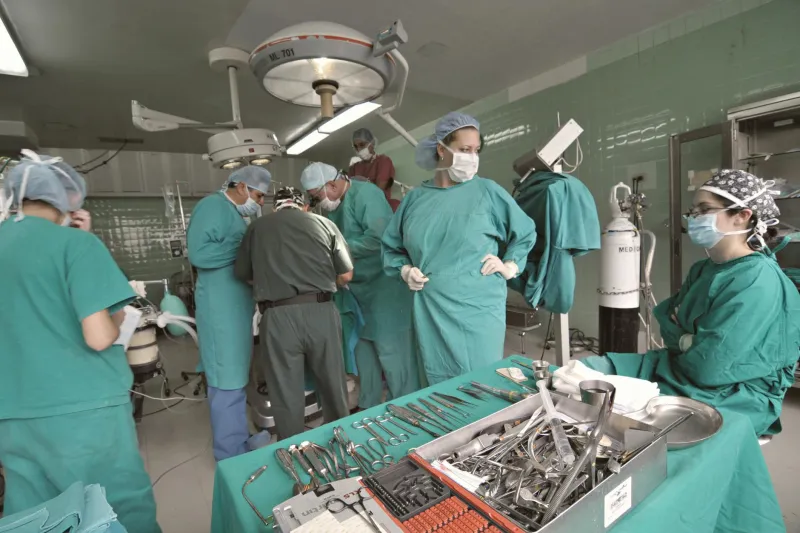
Without X-rays, without modern anesthesia, without any of the tools we consider essential for heart surgery, Williams opened Cornish's chest. He worked by candlelight and intuition, carefully repairing the pericardium—the sac surrounding the heart—that had been punctured by the knife.
The operation took less than two hours. Cornish not only survived but made a full recovery, living for decades afterward. Williams had just performed the world's first successful open-heart surgery, and he'd done it in a hospital that most of Chicago's medical community had written off as a side project.
The Legacy That Almost Wasn't
Word of the surgery spread through medical circles, but slowly. Williams didn't publish his findings immediately, and when he finally did, the medical journals that mattered were reluctant to give full credit to a Black surgeon working in what they saw as a marginal hospital.
Meanwhile, Williams kept building. He became the first Black member of the American College of Surgeons. He reorganized the surgical department at Freedmen's Hospital in Washington, D.C., turning it into a training ground for Black medical professionals who couldn't get opportunities anywhere else. He performed hundreds of surgeries, trained dozens of doctors, and proved repeatedly that excellence could emerge from the most unlikely places.
But history has a way of forgetting stories that don't fit comfortable narratives. For decades, Williams's role in medical history was minimized or ignored entirely. Medical textbooks credited other surgeons with pioneering heart surgery. The hospital he built was eventually absorbed into larger institutions, and his name faded from the conversation.
What He Really Built
Williams understood something that his critics missed: when you're locked out of existing systems, you don't waste time knocking on doors. You build new doors.
Provident Hospital wasn't just a medical facility—it was proof that excellence could exist outside traditional power structures. The doctors Williams trained went on to establish hospitals and medical schools across the country. The surgical techniques he developed influenced generations of physicians who never knew his name.
The carpenter's son who learned medicine by necessity had done more than save one man's life on a summer night in 1893. He'd shown that the most important breakthroughs often come from people the establishment never saw coming.
Today, when we talk about the pioneers of heart surgery, Williams's name is finally returning to the conversation. Not because the medical establishment suddenly became more generous, but because his work was too significant to stay buried forever. Sometimes the most unlikely legends are the ones that matter most.