From Sweeping Floors to Conquering Kings: The Unstoppable Journey of Maurice Ashley
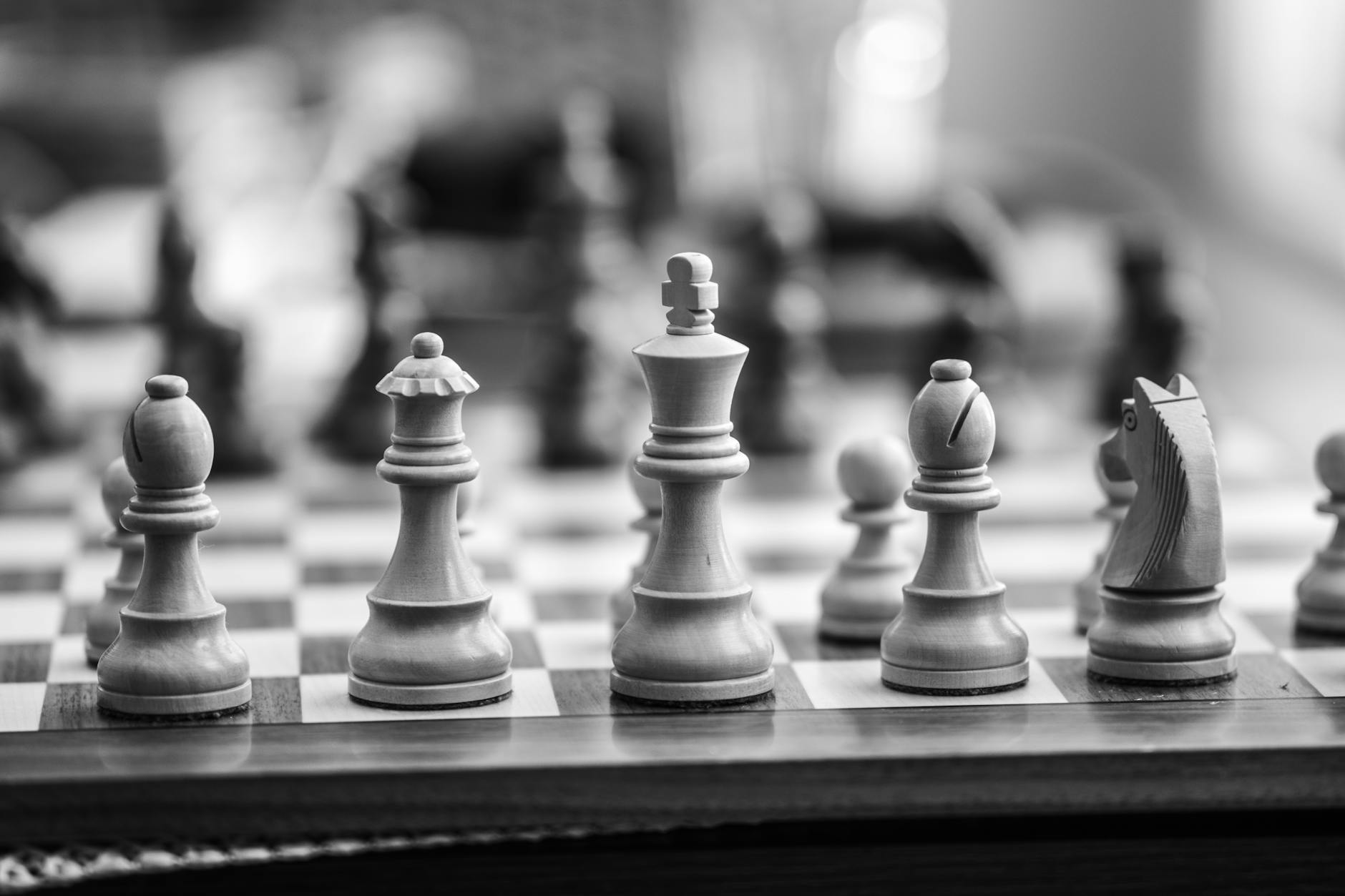
From Sweeping Floors to Conquering Kings: The Unstoppable Journey of Maurice Ashley
There's a particular kind of doubt that doesn't shout at you. It doesn't slam a door in your face or call you by name. It just sits there, quiet and patient, in the eyes of people who've already decided you don't belong. Maurice Ashley spent years collecting those looks — from tournament directors, from ranking committees, from a chess world that had never once crowned someone who looked like him.
He became a grandmaster anyway.
A Board on a Bench
Maurice Ashley was born in St. Andrew, Jamaica, in 1966, and moved to Brooklyn as a teenager to live with his mother. Brooklyn in the early 1980s wasn't exactly a chess hub, but the game had a way of turning up in unexpected places — community centers, barbershops, the concrete edges of public parks where older men played fast and talked faster.
Ashley got his first real look at chess through his older brother's books. No formal instruction, no club membership, no coach pulling him aside to talk about openings and endgames. Just a teenager and a secondhand paperback, working through positions on a board he could barely afford.
What he found in those pages wasn't just a game. It was a system — a place where intelligence and preparation could beat money, connections, and pedigree. For a kid growing up with limited resources in one of New York's tougher neighborhoods, that idea had a particular kind of power.
The Long Apprenticeship
Ashley got serious about competitive chess in his late teens, joining the Harlem Chess Center and immersing himself in a community of players who were every bit as passionate as anyone in a midtown club. He was good. Genuinely good. But "good" and "grandmaster" are separated by a distance that breaks most people.
While working toward his master title in the late 1980s and early '90s, Ashley was doing what a lot of talented young people do when their passion doesn't pay: he was hustling. He worked as a janitor. He took whatever jobs kept the lights on and left enough hours in the day to study chess. He coached youth players in Harlem, eventually leading teams to national scholastic championships — a remarkable achievement that got far less attention than it deserved.
The grandmaster title, the one that would make history, requires players to earn a series of performance norms in international tournaments — results so strong they essentially prove you belong among the world's elite. Ashley chased those norms through the 1990s with a kind of grinding, unglamorous persistence. He wasn't competing in glamorous European tournaments with corporate sponsors. He was grinding.
The Weight of "First"
Here's something that often gets lost in the clean, inspirational version of this story: Ashley wasn't just trying to become a grandmaster. He was trying to become the first. That's a different kind of pressure. Every setback wasn't just a personal disappointment — it was ammunition for anyone who wanted to believe the ceiling was real.
Chess had been around in its modern form for centuries. Millions of people had played it at the highest levels. And in all that time, not one Black player had reached the pinnacle rank. That's not an accident. It's the product of access, of who gets coached and sponsored and invited to the right tournaments. Ashley understood that better than anyone.
What he also understood — and this is the part that defines him — is that the absence of a predecessor isn't a reason to stop. It's a reason to move faster.
The Moment History Changed
In 1999, Maurice Ashley completed his final grandmaster norm. The announcement was quiet by the standards of what it actually meant. There were no ticker-tape parades, no presidential phone calls. The chess world acknowledged it; the wider sports world mostly shrugged.
But in Harlem, in Brooklyn, in the parks and community centers where kids had watched Ashley work for years, it landed differently. Here was proof — documented, official, undeniable proof — that the game's highest honor wasn't reserved for a particular kind of person from a particular kind of place.
Ashley went on to become one of the most prominent chess commentators in the world, bringing the game to mainstream American audiences through his work with ESPN and at major tournaments. He built curricula. He wrote books. He kept coaching.
What the Chessboard Actually Teaches
Ashley has said in interviews that chess taught him to think several moves ahead — not just on the board, but in life. Every obstacle was a position to be analyzed. Every rejection was information.
That framing sounds almost too neat, like something you'd print on a motivational poster. But consider what it actually looked like in practice: a man working a custodial job while studying grandmaster-level theory in his spare time, coaching kids in Harlem while quietly accumulating the credentials that would one day rewrite the record books. That's not a poster. That's discipline operating at a level most people never reach.
The chess world has a term for a move that looks weak but contains a hidden threat: a "quiet move." Maurice Ashley's entire career was a quiet move. Nobody saw it coming until it was already done.
The Unlikely Legend
There's a version of this story that gets told as pure triumph — the underdog who made it, the barrier that finally fell. And all of that is true. But the more honest version includes the years of invisibility, the jobs that had nothing to do with chess, the tournaments that didn't go his way, and the slow, patient accumulation of proof that he belonged.
Maurice Ashley didn't just become a grandmaster. He became one against the specific resistance of a world that had never made room for him — and he did it so thoroughly, so completely, that the room had no choice but to expand.
That's the move worth studying.