The Invisible Genius: How a Night Cleaner's Secret Equations Helped Land Apollo 11
The Man Nobody Noticed
Every night at 11 PM, Thomas Mitchell pushed his cleaning cart through the sterile hallways of McDonnell Douglas's Houston facility. To the engineers rushing past him, he was invisible—just another janitor mopping floors and emptying waste baskets. They had no idea that the quiet Black man in coveralls was working on the same problems that kept them awake at night.
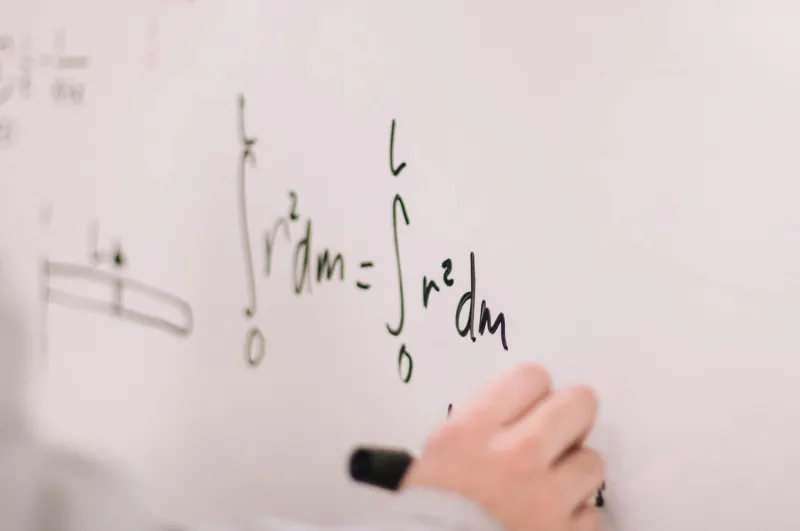
While they went home frustrated by unsolved equations, Mitchell stayed behind, fishing their crumpled calculations from the trash. Under the fluorescent lights of empty conference rooms, he would smooth out the papers and continue where they left off, his pencil dancing across margins with solutions that had eluded teams of PhD-holders.
A Mind Forged in Necessity
Mitchell's path to aerospace mathematics began in rural Mississippi, where formal education ended at eighth grade. His father, a sharecropper, needed every hand in the cotton fields. But Thomas had discovered something magical in the pages of a discarded algebra textbook—numbers that behaved like music, following patterns that felt as natural as breathing.
After moving north during the Great Migration, Mitchell worked days in factories and nights wherever he could find steady pay. The cleaning job at McDonnell Douglas was supposed to be temporary, just another stop on an endless journey of manual labor. He never imagined it would become his graduate school.
Midnight Mathematics
The Space Race was heating up, and pressure mounted on American aerospace companies to solve increasingly complex problems. Trajectory calculations, fuel consumption models, orbital mechanics—the mathematics behind putting humans in space pushed even seasoned engineers to their limits.
Mitchell watched them struggle during the day, then retrieved their abandoned work each night. What started as curiosity became obsession. He began checking out advanced mathematics textbooks from the library, teaching himself calculus, differential equations, and orbital dynamics. His apartment filled with notebooks covered in calculations that would have impressed any university professor.
The breakthrough came on a February night in 1968. Engineers had been wrestling with fuel optimization calculations for the lunar module's descent engine. Multiple teams had attempted solutions, but their models kept producing errors that could mean the difference between landing safely and crashing into the moon's surface.
Mitchell found their latest attempt in the wastebasket, covered with frustrated cross-outs and question marks. By 3 AM, he had identified their error—a subtle miscalculation in the gravitational constant they were using. His corrected equations filled three pages of meticulous work.
The Discovery
The next morning, Dr. Sarah Chen, a young aerospace engineer, arrived early to tackle the same problem that had defeated her team. She found Mitchell's corrected calculations neatly placed on her desk with a simple note: "You might want to check the gravitational constant in equation 7."
Chen ran the numbers. They worked perfectly.
Security cameras revealed the truth: the janitor they barely acknowledged had been solving their most challenging problems for months. When confronted, Mitchell expected to be fired. Instead, he found himself in the most unlikely job interview of his life.
From Mop to Moon
Within six months, Thomas Mitchell traded his janitor's uniform for a desk in NASA's Manned Spacecraft Center. His official title was "Technical Consultant," but everyone knew he was their secret weapon for problems that stumped conventional approaches.
Mitchell's unconventional background became his greatest asset. While traditionally trained engineers thought in established frameworks, he approached problems with fresh eyes and intuitive leaps that often cut through complexity. His calculations for the Apollo 11 mission included critical refinements to the lunar module's landing sequence—adjustments that helped Neil Armstrong and Buzz Aldrin touch down with just seconds of fuel remaining.
The Quiet Revolution
Mitchell's story remained largely unknown outside NASA's inner circles. He preferred working behind the scenes, contributing to missions without seeking credit. Over the next decade, his fingerprints appeared on calculations for Apollo missions, Skylab, and early Space Shuttle designs.
He also became an unofficial mentor to young engineers, teaching them that mathematical intuition mattered as much as formal training. "Numbers don't care about your degree," he would tell them. "They only care if you understand what they're trying to tell you."
Legacy in the Stars
Thomas Mitchell retired from NASA in 1985, his contributions known to relatively few outside the aerospace community. He had helped humanity reach the moon, but his name appeared on no monuments or history books.
Yet his story embodies something profound about human potential. In a world obsessed with credentials and pedigree, Mitchell proved that genius can emerge from the most unexpected places. His midnight mathematics lessons remind us that the next breakthrough might come from someone we've never thought to notice—someone pushing a mop, waiting tables, or working any of the thousand jobs that keep our world running while dreams take flight overhead.
The janitor who helped guide Apollo 11 to the moon shows us that extraordinary contributions often come from ordinary people who refuse to let circumstances define their limits. Sometimes the most unlikely legends are hiding in plain sight, waiting for someone to look beyond the uniform and see the mind within.