When Life Takes an Unexpected Turn
Fannie Farmer was supposed to be a teacher. In 1878, that was one of the few respectable careers available to a bright 16-year-old girl from a middle-class Boston family. She had the grades, the temperament, and the family support to make it happen. Then the stroke hit.
Nobody called it a stroke back then—medical terminology was still catching up to medical reality. What they knew was that Fannie suddenly couldn't walk properly, couldn't control her left side, and definitely couldn't stand in front of a classroom managing dozens of children. The girl who'd been headed for a predictable, respectable life was suddenly an "invalid," dependent on her family's charity and society's limited imagination about what disabled people could accomplish.
She spent the next several years at home, helping her mother run their boarding house on West Newton Street. It was supposed to be temporary—something to do while she recovered. Instead, it became the foundation of a revolution that would reshape every American kitchen.
Precision in an Imprecise World
Cooking in 1880s America was more art than science. Recipes called for "a piece of butter the size of an egg" or "flour enough to make a stiff batter." Experienced cooks could navigate these vague instructions, but beginners—and there were millions of them as families moved from farms to cities—were lost.
Fannie watched her mother's boarders struggle with basic meals. She saw young wives reduced to tears over ruined dinners and families subsisting on bread and whatever the local bakery could provide. The problem wasn't intelligence or effort—it was information. Nobody was teaching cooking systematically, with the kind of precision that made success predictable.
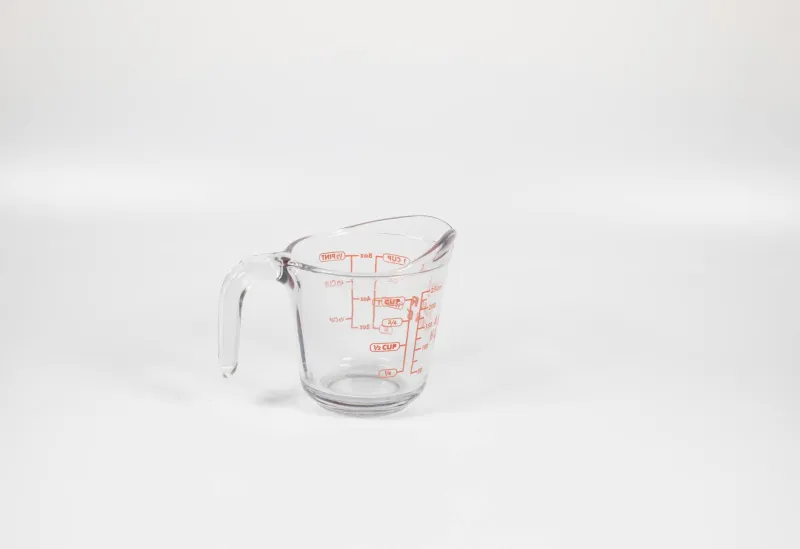
While recovering from her stroke, Fannie had time to think about cooking differently. She started measuring everything—not just guessing at proportions but actually using cups and spoons to determine exact quantities. She took notes on timing, temperatures, and techniques. What started as a way to help her mother's kitchen run smoothly became something much larger: a new approach to food that treated cooking as a skill that could be learned, not a mystery that some people just "had."
Building a Movement, One Recipe at a Time
By her late twenties, Fannie was strong enough to venture beyond the family boarding house. She enrolled in the Boston Cooking School, where she encountered the formal side of culinary education. The school taught cooking as domestic science, but even their methods relied heavily on intuition and experience.
Fannie brought her obsession with measurement to everything she studied. While other students learned to judge doneness by smell or feel, she timed everything. While they estimated quantities, she insisted on precise measurements. Her instructors initially found her approach rigid, even obsessive. They didn't understand that she was solving a problem they hadn't recognized.
After graduating, Fannie became an assistant at the school, then eventually its principal. She used her position to standardize the curriculum, introducing the measurement techniques she'd developed during her years of recovery. Students who'd struggled with traditional "handful of this, pinch of that" methods suddenly found cooking manageable.
The Book That Changed Everything
In 1896, Fannie published "The Boston Cooking-School Cook Book." Her publisher, Little, Brown and Company, was skeptical—cookbooks were niche products with limited commercial appeal. They agreed to publish it only if Fannie paid the printing costs herself.
The book was unlike anything that had come before. Every recipe included precise measurements: "1 cup of flour" instead of "flour enough." "1/2 teaspoon of salt" instead of "salt to taste." "Bake for 25 minutes at 375 degrees" instead of "bake until done." It sounds simple now, but it was revolutionary.
More importantly, the book treated cooking as something anyone could learn. Fannie wrote for beginners, explaining not just what to do but why. She included sections on nutrition, food safety, and kitchen management. The woman who'd been sidelined by illness had created a manual for domestic independence.
The Democracy of Measurement
The cookbook was an immediate success, selling hundreds of thousands of copies in its first decade. But its real impact went far beyond sales figures. Fannie's measurement system became the American standard, copied by every cookbook author who followed. More importantly, it democratized cooking in ways that resonated far beyond the kitchen.
Before Fannie, cooking knowledge was passed down through families, usually from mother to daughter. If you didn't have access to that tradition—because you were an immigrant, an orphan, or simply from a family that hadn't prioritized cooking—you were at a severe disadvantage. Fannie's systematic approach meant anyone could learn to cook well, regardless of background.
This was particularly important as America urbanized. Farm families might have generations of cooking wisdom, but city families often had to start from scratch. Fannie's book gave them a foundation that didn't depend on inherited knowledge or cultural tradition.
An Unlikely Pioneer's Lasting Legacy
Fannie Farmer died in 1915, but her influence on American cooking was just beginning. Her measurement system became so standard that it's impossible to imagine cooking without it. Every recipe card, every cooking show, every food blog traces back to the precision she introduced.
The stroke that derailed her teaching career ultimately allowed her to teach millions. The woman who was supposed to educate children in a single classroom ended up educating generations of families across the entire country. Her simple innovation—measuring ingredients—seems obvious in retrospect, but it required someone with both the analytical mind to see the problem and the determination to solve it systematically.
Sometimes the detour becomes the destination. Fannie Farmer's unexpected path from invalid to culinary revolutionary proves that the most important innovations often come from people who have time to think differently about everyday problems.