The Numbers Man: How a Mob Accountant Brought Down an Empire From the Inside
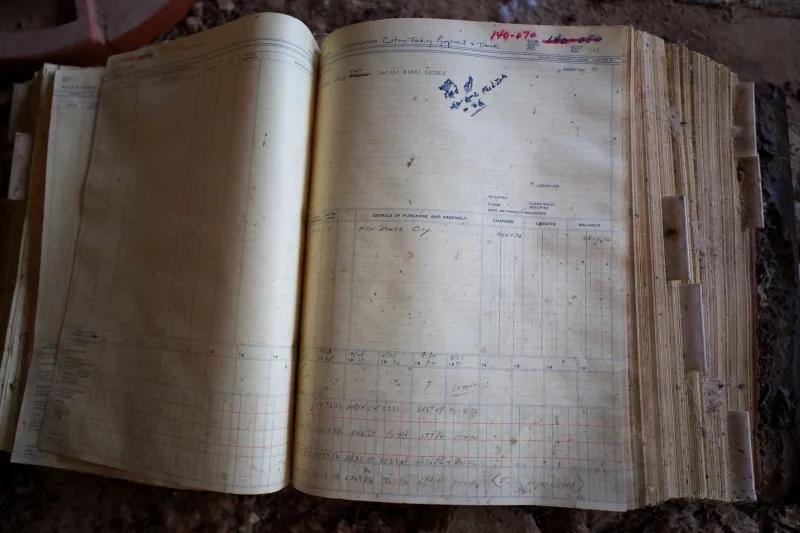
There's a particular kind of invisibility that comes with being the person who handles money. Nobody writes songs about the accountant. Nobody makes him the villain in the movie. He's the guy in the back room, the one with ink-stained fingers and a ledger full of other people's secrets. For years, that invisibility was exactly what kept Frank Scalise alive.
Scalise — not his real name, a detail that matters less than what he did — spent the better part of a decade working as a bookkeeper for one of the most powerful organized crime networks operating in the American Northeast during the mid-twentieth century. He wasn't muscle. He wasn't connected in the traditional sense. He was simply very good with numbers, and the men who ran the operation needed someone who could make the money disappear cleanly. Frank did that job without complaint, without curiosity, and without drawing attention to himself.
Then the FBI knocked on his door, and everything changed.
The Man Nobody Suspected
What made Frank valuable to the mob was the same thing that made him dangerous to them: he was thorough. While the bosses operated on handshakes and implied threats, Frank operated on documentation. He kept parallel sets of records — one version for appearances, one version that reflected reality. He tracked cash flows, bribe payments, front business revenues, and the occasional unexplained expense that, if you knew what to look for, told a very specific story about very specific crimes.
He hadn't done this out of any noble intention. He'd done it because he was an accountant, and accountants keep records. It was simply how his brain worked.
When federal agents first approached him, Frank's initial instinct was silence. The men he worked for had made very clear what happened to people who talked. But the agents had something that changed his calculation: they already knew enough to put him away for a long time. The question wasn't whether Frank would face consequences. The question was which direction those consequences would travel.
A New Kind of Evidence
Before Frank's cooperation, federal prosecutors pursuing organized crime faced a persistent structural problem. The bosses rarely touched the actual criminal acts. They insulated themselves through layers of intermediaries, plausible deniability, and a culture of silence so deeply ingrained that witnesses simply didn't exist — or didn't survive long enough to testify. Physical evidence was difficult to obtain, and the men at the top of these organizations were often careful enough to leave very little of it.
Frank's ledgers changed the equation entirely.
Financial records, it turned out, told stories that no witness could be intimidated into recanting. Numbers didn't get nervous on the stand. A cash payment logged on a Tuesday in November, cross-referenced against a police report showing a rival operation's warehouse burned down on Wednesday, didn't require a brave witness to explain what it meant. It explained itself.
Federal investigators working with Frank began building cases from the money outward rather than from the crimes inward. Instead of trying to prove that a boss had ordered a specific act, they demonstrated — through meticulous financial reconstruction — that a specific boss had received specific financial benefit from a specific outcome. The legal theory wasn't new. The evidentiary approach was.
Teaching the Government to Follow the Money
What Frank provided wasn't just testimony. It was an education.
He spent months working with federal investigators, walking them through the architecture of how a large criminal enterprise actually managed its finances. He explained which transactions were designed to obscure and which were designed to legitimize. He showed them how cash moved from street-level operations up through layers of front businesses and eventually into investments that looked, from the outside, entirely respectable. He identified the pressure points — the moments in any financial chain where evidence was most likely to survive scrutiny.
Investigators later described the experience as learning a new language. Before Frank, they were listening to conversations they couldn't quite parse. After him, they understood the grammar.
The prosecutions that followed his cooperation weren't just successful — they were structurally different from anything that had come before. Indictments focused on financial conspiracy charges that could be supported by documentary evidence rather than relying solely on witness accounts. Convictions held up on appeal because the evidentiary foundation was concrete rather than testimonial. Sentences were longer because the financial scope of the crimes could be demonstrated rather than merely alleged.
The Playbook That Outlasted Him
Frank eventually entered witness protection and disappeared from public record, as these stories tend to end. The men he helped convict were replaced, over time, by other men, because that is also how these stories tend to end. Organized crime didn't collapse because one accountant talked.
But the investigative methodology he helped develop didn't disappear with him. The principle of building criminal cases from financial records outward — of treating money flows as the most reliable narrator of criminal activity — became foundational to federal law enforcement strategy. It shaped how the FBI approached not just organized crime but public corruption, securities fraud, and eventually the complex financial crimes that emerged as the economy digitized and globalized.
The phrase "follow the money" entered the cultural vocabulary as though it were obvious wisdom. It wasn't always obvious. Someone had to demonstrate it, ledger page by ledger page, in a series of federal courtrooms that most people never heard about.
That someone was a quiet man in a back room who was very good with numbers and happened to keep everything he ever wrote down.
An Unlikely Architect
There's something almost poetic about the fact that the person who helped modernize federal crime-fighting wasn't a heroic agent or a crusading prosecutor. He was a man who had spent years helping criminals stay invisible, using the exact same skills in reverse to make them impossible to ignore.
Frank Scalise didn't set out to change anything. He set out to survive. But the tools he brought with him — the ledgers, the methodology, the patient, unglamorous work of making sense of numbers — turned out to be exactly what the government needed at exactly the moment it needed them.
Some legends are built on battlefields. Some are built on spreadsheets.