She Hid a Nation's Soul Between the Shelves
The Woman Nobody Suspected
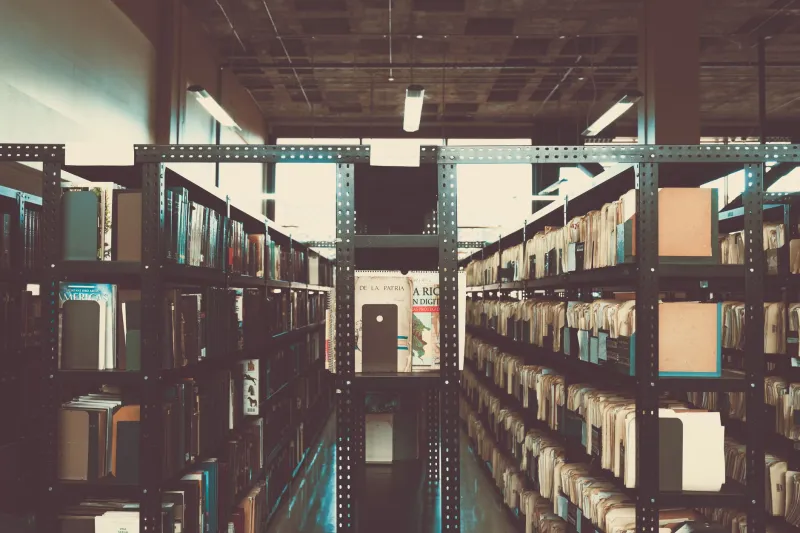
She wasn't a soldier. She wasn't a politician or a professor or anyone whose name appeared in the newspapers. She was a librarian — the kind of person who knew where everything was, who shushed children on Tuesday afternoons, and who kept meticulous records in a handwriting so small it looked like lace.
That anonymity, it turned out, was the most useful thing she possessed.
In the years when occupying forces made a deliberate project of erasing a community's cultural memory — burning texts, banning languages, confiscating anything that told people who they were — librarians across Europe and beyond became unlikely soldiers in a war most people didn't know was being fought. Among them, a handful of women stand out for what they managed to smuggle, hide, and carry to safety. Their stories were buried for decades beneath the larger, louder history of military resistance. But the books they saved outlasted the regimes that wanted them destroyed.
This is the story of what it looks like when an ordinary civil servant decides that her job description doesn't end where the danger begins.
What a Book Means When It's Forbidden
To understand why someone would risk imprisonment — or worse — to preserve a collection of texts, you have to understand what those books represented. They weren't just paper and ink. In communities targeted for cultural erasure, a book written in the native language, telling local history, preserving folk traditions or religious practice, was an act of defiance simply by existing.
When authorities moved to confiscate or destroy such materials, they weren't engaging in censorship in any ordinary sense. They were attempting something closer to memory deletion. Kill the books, and you kill the shared understanding that holds a people together. You make it harder to argue that you ever had a distinct identity worth protecting.
Librarians understood this intuitively. Their entire professional life was built around the idea that knowledge should be preserved and made accessible. When that mission came into direct conflict with state power, some of them chose the mission.
The Catalog as a Weapon
The mechanics of what these women did were, on the surface, mundane. Books were moved at night, wrapped in oilcloth, tucked into false-bottomed crates, buried in root cellars, hidden inside the walls of farmhouses, or transferred to private homes where sympathetic families accepted the risk of discovery. The librarians maintained mental inventories of what was where — because a written record could be found, and a found record was a death sentence.
What made it possible was the same quality that made librarians invisible to the authorities: they were underestimated. A woman carrying a basket through a checkpoint was less suspicious than a man with a briefcase. A librarian closing up her building after dark drew less attention than a courier on a bicycle. The assumption that women in quiet professional roles posed no political threat was, in this case, exactly the assumption that allowed them to operate.
One documented example comes from wartime Poland, where librarians connected to the underground worked to preserve Jewish cultural materials targeted by Nazi forces. Others emerged from occupied France, from the Baltic states, from communities across Central Europe where the deliberate destruction of minority cultures was official policy. In each case, the pattern was similar: an ordinary person, in an ordinary job, making an extraordinary decision to keep showing up.
The Weight of What Was Carried
For the survivors of these communities, the return of preserved books after the war carried an emotional weight that's difficult to overstate. Imagine losing your home, your neighbors, your language from public life — and then being handed a book that proves your grandmother's grandmother wrote poetry. That it existed. That someone thought it worth saving.
The books were proof. They said: you were here, and you mattered, and someone risked everything to make sure the record survived.
In communities that had been told, explicitly and violently, that their culture was worthless — that message was revolutionary.
Credit That Never Came
Most of the women who did this work received no formal recognition. The postwar years were complicated, and the architecture of official memory tended to celebrate military heroes, resistance fighters with guns, men who blew up bridges. The woman who spent three years moving books through a war zone and maintaining a mental catalog of ten thousand hidden volumes didn't fit the heroic template.
Some of them spoke about it quietly, years later, to grandchildren or local historians. Some took the secret to their graves. The records that do exist were largely reconstructed by archivists and academics who went looking specifically because they suspected the official history was incomplete.
It usually was.
What Stubbornness Looks Like From the Outside
There's a temptation to frame this kind of story as selfless sacrifice — to make the librarian into a saint. But that misses something important. The women who did this work weren't saints. They were stubborn. They had a deep, almost constitutional refusal to accept that their job was finished just because someone with a uniform said so.
They had also spent their careers believing, professionally and personally, that a book was worth something. That belief didn't evaporate under pressure. If anything, pressure confirmed it.
In that sense, the most radical thing about these women wasn't their bravery, though they were undeniably brave. It was their consistency. They just kept doing their job — under conditions that made doing their job an act of resistance.
The Long Shelf Life of Quiet Heroism
The libraries that survived — or were reconstructed from hidden collections — are still in use today. The books are read. The languages they were written in are spoken. The cultures that were supposed to be erased are, stubbornly, still here.
None of that happened by accident. It happened because a woman who nobody suspected of being dangerous decided that the books in her care were worth more than her own safety.
That's not a small thing. That's, quietly and without fanfare, the whole thing.