The Invisible Seamstress: How Alabama's Secret Couturier Dressed America's Elite
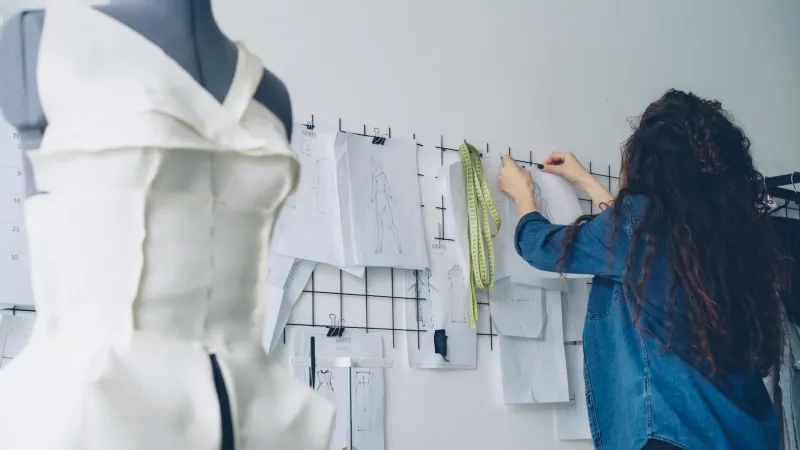
The Wedding Dress That Made History
On September 12, 1953, Jacqueline Bouvier walked down the aisle wearing a gown that would become one of the most photographed wedding dresses in American history. Made of ivory silk taffeta with a portrait neckline and a full skirt that required 50 yards of fabric, it was a masterpiece of couture craftsmanship.
 Photo: Jacqueline Bouvier, via 4.bp.blogspot.com
The newspapers called it "exquisite." Society magazines declared it "perfection." Fashion editors wrote breathless descriptions of every detail. But nowhere in any of those articles would you find the name of the woman who designed and hand-sewed every stitch.
Ann Lowe had learned early that in her business, invisibility was the price of excellence.
From Cotton Fields to Cutting Tables
Lowe's journey to the heights of American fashion began in the most unlikely place imaginable: rural Alabama, where her grandmother had been enslaved and her mother worked as a seamstress for wealthy white families. When Ann was just sixteen, her mother died, leaving behind a pile of unfinished ball gowns and a teenage daughter who'd inherited magical fingers.
Ann completed her mother's orders and discovered she possessed something rarer than talent: an instinctive understanding of how fabric could transform a woman into a work of art. But talent without opportunity is just frustration, and in 1920s Alabama, opportunities for Black women in fashion were precisely zero.
So Lowe made her own.
The Great Migration North
In 1928, Lowe gathered her life savings and headed to New York City with a suitcase full of dreams and a head full of dress designs that no one in Alabama would ever let her create. She enrolled at S.T. Taylor Design School, where she was the only Black student in a program that barely tolerated her presence.
Her classmates whispered. Her instructors ignored her. The fashion industry pretended she didn't exist. But Lowe had something more powerful than acceptance: she had vision.
While other students copied European styles, Lowe created something entirely new—gowns that combined classical elegance with an American sensibility, dresses that made women look like they were floating on air. Her graduation collection was so stunning that several society matrons placed orders on the spot.
There was just one condition: her name could never appear on the label.
The Price of Perfection
By the 1940s, Lowe had built a thriving couture business in Manhattan, creating gowns for the wives of governors, senators, and business titans. Her client list read like a who's who of American high society, but her name remained a carefully guarded secret.
The arrangement was simple and devastating: wealthy white women could wear Ann Lowe originals, but they could never admit it. Her designs were attributed to established fashion houses, her innovations credited to white designers, her artistry hidden behind a wall of willful blindness.
Lowe accepted this bargain because she had no choice, but she never stopped fighting for recognition in the only way available to her: through the impossible beauty of her work.
The Bouvier Commission
When Janet Bouvier approached Lowe about creating her daughter's wedding dress, it seemed like just another society commission. The Bouviers were old-money Catholic, the kind of family that valued tradition and discretion above all else. They wanted something spectacular but understated, elegant but not flashy.
Lowe understood the assignment perfectly. She created a dress that would make Jacqueline look like American royalty—which, as it turned out, was exactly what she was about to become.
The gown required three months of hand-sewing, with Lowe personally crafting every detail from the silk-covered buttons to the intricate lacework. It was her masterpiece, a dress that would define bridal fashion for generations.
When the wedding photos appeared in newspapers across the country, fashion editors declared it the most beautiful wedding dress they'd ever seen. But Ann Lowe's name appeared nowhere in the coverage. As far as the world knew, the dress had materialized from thin air.
The Business of Invisibility
Lowe's exclusion from public recognition wasn't accidental—it was systematic. Department stores that sold her designs removed her labels. Fashion magazines that featured her gowns credited them to anonymous "designers." Society columnists who gushed about her creations never mentioned her name.
This wasn't just racism; it was economic warfare. By erasing Lowe's identity, the fashion establishment could appropriate her innovations while denying her the celebrity that would have made her financially independent. She remained a subcontractor to her own genius, creating wealth for others while struggling to pay her own bills.
Yet Lowe persevered, building a reputation through whispered recommendations and word-of-mouth referrals. Her clients knew exactly who made their gowns—they just agreed never to say so publicly.
The Hidden Empire
By the 1950s, Lowe's salon on Lexington Avenue was the worst-kept secret in Manhattan high society. Socialites would slip in through side entrances for fittings, emerging hours later transformed by gowns that made them look like movie stars.
Lowe employed a team of seamstresses, taught apprentices, and maintained relationships with the finest fabric suppliers in Europe. She was running a successful business empire while remaining completely invisible to the industry she dominated.
Her designs influenced fashion trends for decades, but the credit always went to others. Her techniques were copied by major fashion houses, but her name never appeared in fashion history books. She was simultaneously the most important and most overlooked designer of her generation.
The Reckoning That Never Came
Lowe continued creating couture gowns into the 1960s, dressing everyone from Rockefellers to Roosevelts while remaining hidden in plain sight. When she finally retired, her contribution to American fashion disappeared with her, as if thirty years of groundbreaking design had never happened.
It wasn't until decades later that fashion historians began piecing together the true story of who had really dressed America's elite. By then, most of her clients had died, taking their secrets with them. Lowe herself passed away in 1981, still largely unknown to the public whose taste she had shaped for generations.
The Seamstress Who Changed Everything
Ann Lowe's story reveals the hidden architecture of American success—how talent rises despite systematic exclusion, how excellence persists despite deliberate erasure, and how some people change the world while remaining completely invisible to it.
She proved that genius doesn't require recognition to exist, that artistry doesn't need credit to endure, and that sometimes the most influential people are those whose names we never learn.
Today, when we celebrate diversity in fashion, we should remember the woman who integrated American couture one dress at a time, creating beauty in a world determined to deny her credit for it. Ann Lowe dressed America's most powerful women while remaining powerless herself—and somehow, through sheer force of talent, made that contradiction work.
Her legacy isn't just in the museum pieces that survive, but in the reminder that extraordinary achievements often happen in the shadows, created by people whose names the world conspires to forget.