Traps, Tides, and Ticker Tape: The Maine Lobsterman Who Humbled Wall Street

Photo: Paul VanDerWerf from Brunswick, Maine, USA, CC BY 2.0, via Wikimedia Commons
There is a particular kind of knowledge that no university can issue a diploma for. It lives in the hands — in the way a lobsterman reads a change in current before the weather service does, in the way he knows which coves hold traps and which ones swallow them. For decades, the financial world operated on the assumption that this kind of knowledge was irrelevant. Then came Elwood Cray.
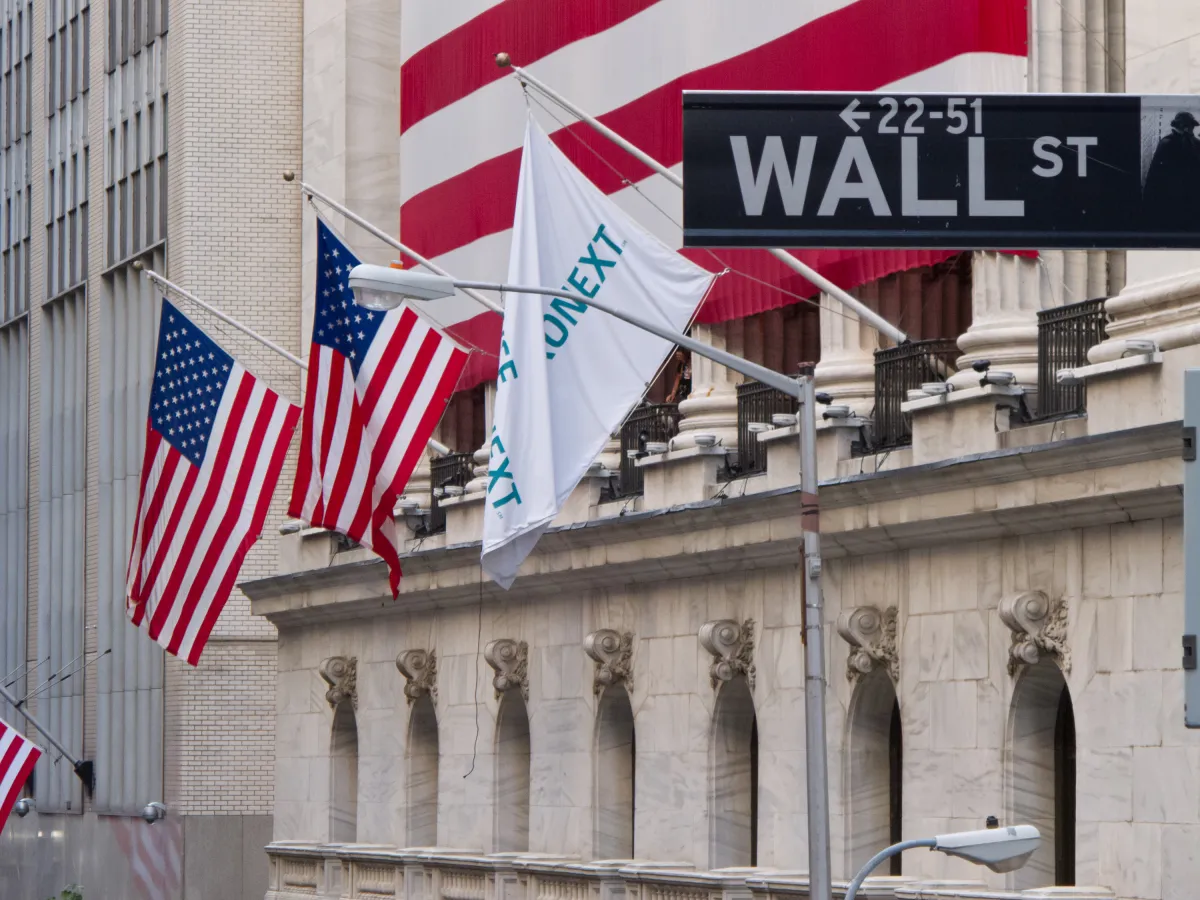 Photo: Wall Street, via upload.wikimedia.org
Cray grew up in Stonington, Maine, a working harbor town on Deer Isle where the lobstering trade is not a romantic lifestyle choice — it is a livelihood passed down through generations like a surname. His father worked the water. His grandfather worked the water. By fourteen, Elwood was hauling traps before dawn and missing school more days than he attended. By eighteen, he had dropped out entirely.
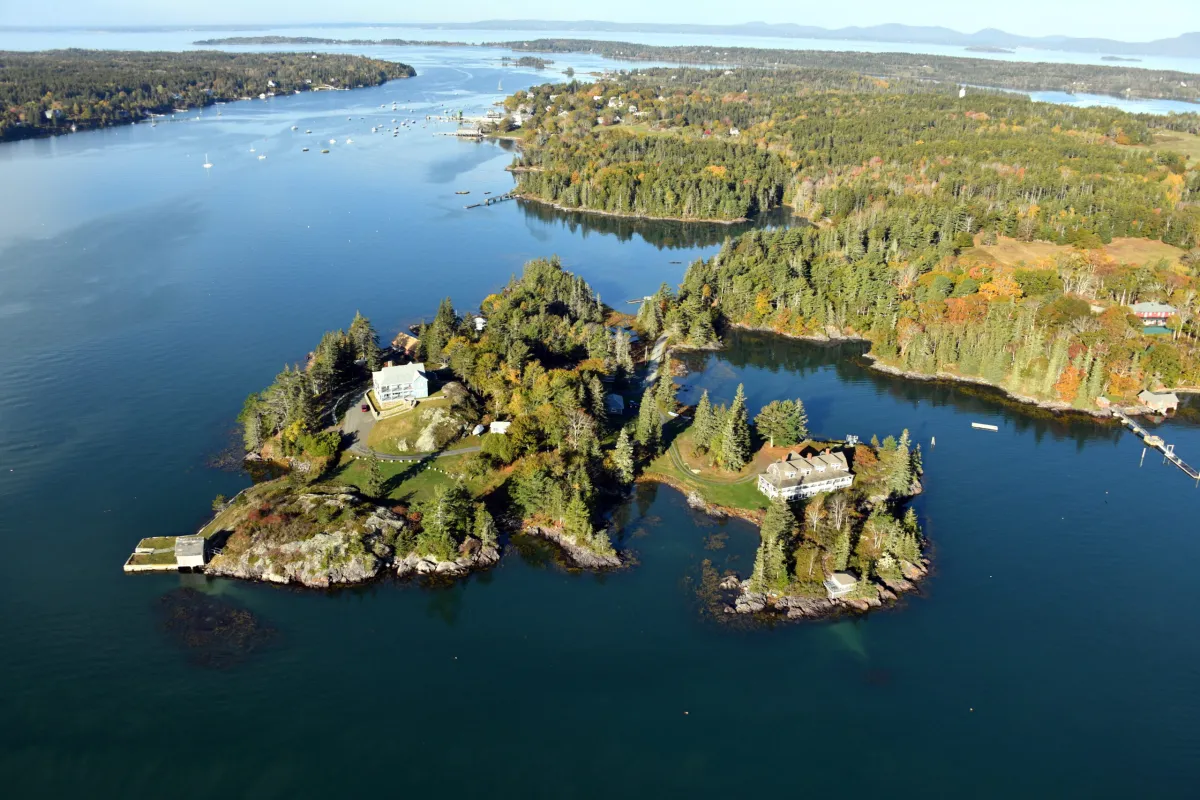 Photo: Deer Isle, via i0.wp.com
 Photo: Stonington, Maine, via www.rickberk.com
Wall Street was not on his radar. It barely existed as a concept in Stonington in the early 1980s. What Elwood had, though, was time — long, cold stretches of it on the open Atlantic — and a restless, pattern-hungry mind.
Reading the Water
Lobstering, at its core, is an exercise in probabilistic thinking. You cannot see what is beneath the surface. You make educated guesses based on temperature, season, migration patterns, and the behavior of competitors. You learn to distinguish signal from noise. You develop patience that most people never acquire because most people are never forced to.
Cray has described the discipline in almost identical terms when talking about investing. "The ocean doesn't care what you think," he told a reporter from a regional Maine newspaper in 2004, one of the few interviews he ever gave. "It just does what it does. You either learn to read it or you lose your gear."
He started buying stocks in his late twenties with a few thousand dollars saved from a good season. He had no broker. He had no financial advisor. What he had was a library card and an almost pathological commitment to reading the primary documents — annual reports, 10-Ks, earnings transcripts — the same way he read tide charts and weather data. He was looking for patterns. He was looking for things that didn't add up.
The Education Nobody Gave Him
Cray's approach was, by any formal standard, unorthodox. He avoided the financial press almost entirely, reasoning that if everyone was reading the same commentary, no one was gaining an edge. Instead, he focused on industries he understood viscerally — fishing, maritime shipping, food processing, cold-chain logistics. He looked for businesses run by people who reminded him of the men he worked alongside: practical, unsentimental, and deeply aware of how quickly conditions could turn.
He also looked for what he called "tide marks" — the small, overlooked details in financial filings that indicated a company's true health the way waterline stains on a dock indicated the real range of a harbor's tides. A footnote about inventory accounting. A subtle shift in management language between quarters. The kind of thing that a twenty-two-year-old analyst fresh from Wharton, racing to produce a model, might scroll past without registering.
By the mid-1990s, Cray had quietly turned that initial investment into something considerably larger. Word spread slowly, the way it does in small coastal communities — not through press releases but through whispers at the co-op and conversations at the fuel dock. A few local businessmen asked if they could invest alongside him. He said yes, almost reluctantly.
Building From the Dock
What became Cray Capital Management was never meant to be a hedge fund in the conventional sense. It had no Manhattan office, no Bloomberg terminals, no army of analysts in pressed shirts. For years, Cray ran it from a converted boat shed on the harbor, with a desktop computer, a fax machine, and a view of the water that he considered, without irony, essential to his process.
"The market has seasons," he explained to one early investor. "If you forget that, you start making decisions like it's always summer."
The fund's performance over its first decade was, by the measures that matter on Wall Street, quietly remarkable. It didn't produce the explosive, headline-grabbing returns that attracted magazine profiles. What it produced was consistency — steady, risk-adjusted gains through market cycles that chewed up more sophisticated operations. During the dot-com collapse of 2000 to 2002, when funds staffed by credentialed analysts were hemorrhaging capital, Cray's portfolio held. He had been skeptical of technology valuations for years, not because he had run a discounted cash flow model, but because the businesses reminded him of fishing ventures that promised rich waters without acknowledging the cost of the weather.
What the Ivy League Didn't Teach
Financial academics who have since studied Cray's methodology tend to locate his edge in a few specific places. First, his genuine disinterest in short-term performance freed him from the career-risk calculations that distort the behavior of institutional fund managers. A Yale-educated portfolio manager who underperforms for two consecutive quarters faces professional consequences. Cray faced no such pressure. He could afford to be right slowly.
Second, his observational training — honed over years of reading an environment that punished inattention — made him unusually good at detecting inconsistency. Markets, like oceans, send signals that contradict the official forecast. Most investors are too busy looking at the forecast to notice the signals.
Third, and perhaps most importantly, he had a visceral understanding of risk that classroom education rarely instills. He had watched boats go down. He had seen good fishermen make one careless decision and lose everything. Risk, for Cray, was not an abstraction in a variance formula. It was a physical memory.
The Unlikely Legend
Cray quietly wound down outside investment in his fund in the early 2010s, returning capital to his limited partners and returning, in most practical senses, to the life he had always led. He still lobsters. He still reads annual reports. He remains almost entirely unknown outside of coastal Maine and a small circle of financial professionals who encountered his work and came away unsettled in the best possible way.
His story tends to make people in finance uncomfortable, not because it suggests that education is worthless, but because it suggests that the kind of intelligence Wall Street has learned to recognize and reward is not the only kind that works. The ocean, as Cray has always understood, does not grade on a curve. It simply tests whether you have been paying attention.
In the end, that may be the most important lesson he never had to learn in a classroom.