One Improvised Lesson, One Dying School, and the Accidental Blueprint That Reshaped American Education
Photo: Internet Archive Book Images, No restrictions, via Wikimedia Commons
Robert Chalmers almost called in sick.
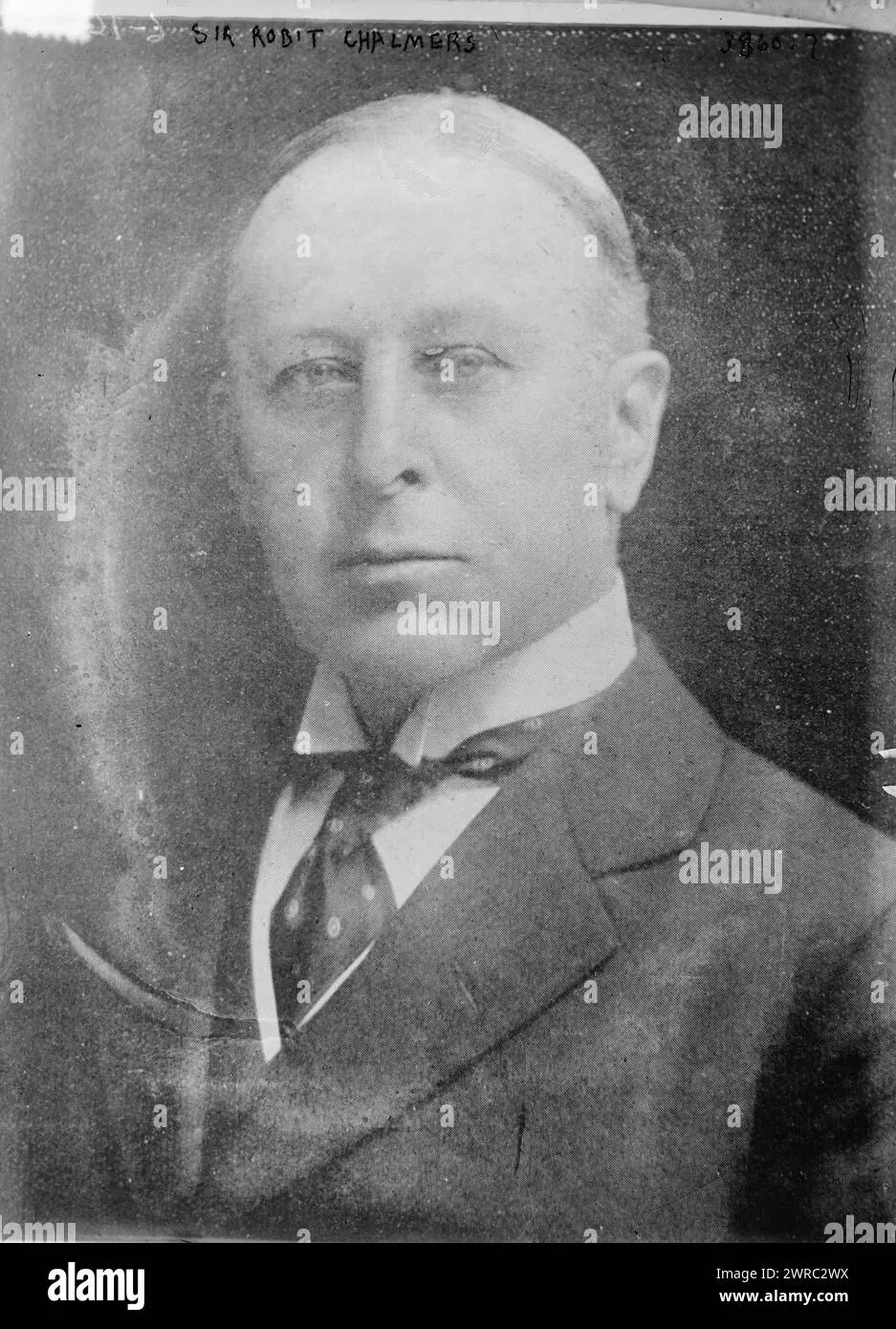 Photo: Robert Chalmers, via c8.alamy.com
He'd been substituting across Chicago's South Side for three years by the fall of 1971, picking up assignments the way you pick up odd jobs — gratefully, without much expectation. He was thirty-one, a former graduate student in sociology who had left his PhD program when the funding dried up and hadn't yet figured out what came next. Teaching — real teaching, with a classroom of his own — wasn't something he'd seriously considered. He didn't have the credentials. He barely had a plan.
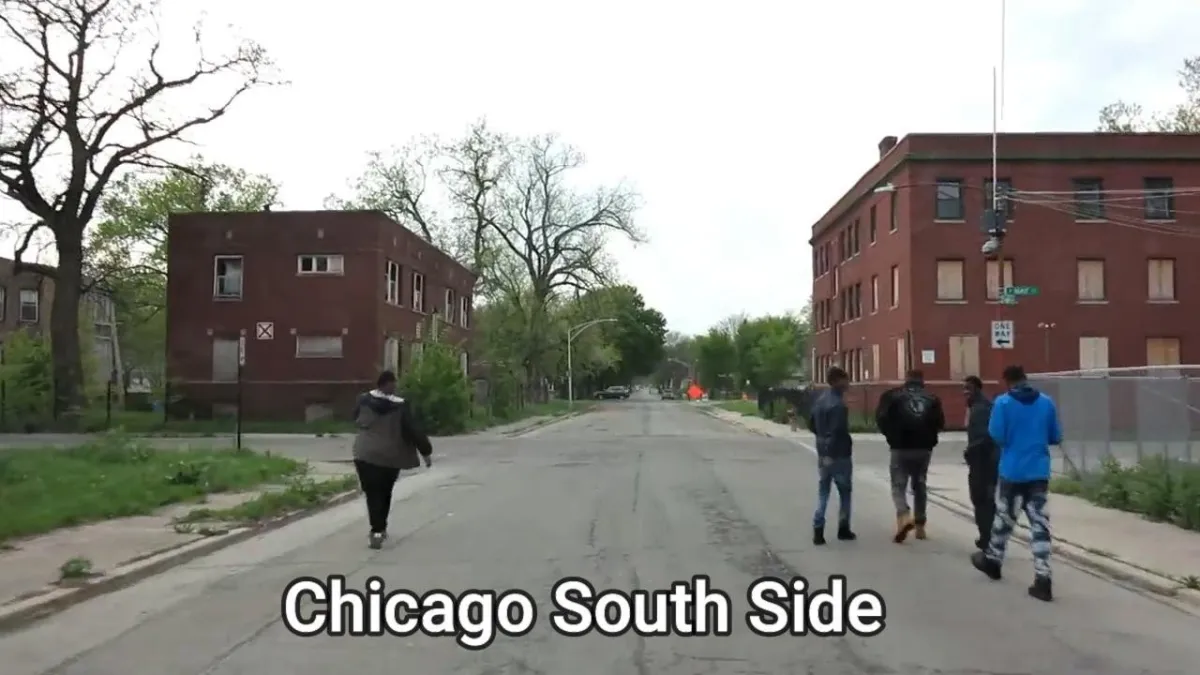 Photo: Chicago's South Side, via i.ytimg.com
The call came on a Tuesday morning. A school in Woodlawn needed someone for the day. The regular teacher was out sick. Did he want it?
He almost said no. He said yes.
The School Nobody Wanted to Work In
Woodlawn Elementary in 1971 was the kind of school that appeared in newspaper stories about everything wrong with urban education. The building was aging and underfunded. Teacher turnover was severe — staff came and went with a regularity that made continuity of instruction nearly impossible. The neighborhood surrounding it had been hollowing out for years, squeezed by disinvestment, white flight, and the slow collapse of the industrial economy that had once sustained the South Side.
The students, mostly Black children from families navigating genuine hardship, were not considered promising material by a system that had largely stopped trying to reach them. Test scores were low. Attendance was erratic. Morale, among both students and the adults responsible for them, was somewhere below the floor.
Chalmers walked in with a folder of worksheets he'd been handed at the front office and a general sense of dread.
The classroom was a seventh-grade section, about twenty-two kids, who looked at him with the particular expression that experienced substitute teachers will recognize immediately: the assessing stare of children who have seen this before and are calculating how the next six hours will go.
He looked at the worksheets. He looked at the kids. He put the worksheets down.
What He Tried Instead
Chalmers would later struggle to explain exactly what made him do what he did next. He'd been thinking, for weeks, about a technique he'd read about in an old sociology text — a method of structured group inquiry that researchers had used to study community decision-making. The idea was simple: present a real problem, let the group define it, then work through it collectively. No lecture. No right answers provided in advance. Just the problem and the people in the room.
He had never tried it in a classroom. He had no idea if it would work with twelve-year-olds. But the worksheets felt like a guarantee of failure, and he needed something else.
He walked to the board and wrote a single question: What's wrong with this neighborhood, and whose job is it to fix it?
For a moment, nothing happened. Then a girl in the third row said, "That's not a school question."
"Today it is," Chalmers said.
What followed was, by his own description, chaotic, loud, frequently off-topic, and completely alive. The students argued. They challenged each other. They challenged him. They drew on knowledge about their own community — about the specific streets, specific buildings, specific failures — that no curriculum had ever thought to ask them for. By the time the lunch bell rang, nobody wanted to stop.
"They asked me if we could keep going after lunch," Chalmers recalled in a 1994 interview. "I said yes before I even thought about it."
The Day That Wouldn't End
The afternoon session drew in students from adjacent classrooms who'd heard the noise and wandered over. A teacher down the hall stuck her head in, intending to complain, and ended up staying for forty minutes. By the time the final bell rang, Chalmers had been running what amounted to a continuous seminar for six hours, and the students were asking when he'd be back.
He wasn't scheduled to come back. He'd been booked for one day.
But the regular teacher's absence extended, and then the school's principal — a woman named Doris Watkins who had been watching the situation with cautious curiosity — asked Chalmers if he'd be willing to stay on for a few weeks. He agreed. The weeks became a semester. The semester became a year.
Watkins, who had spent fifteen years trying to keep the school functioning under impossible conditions, recognized something in what Chalmers was doing that she couldn't quite name but couldn't ignore. The students who'd been in his class were showing up. They were talking differently — not just about school, but about their neighborhood, their futures, the gap between what was and what could be.
The Slow Spread of an Unplanned Idea
Chalmers eventually earned his teaching certificate and stayed at Woodlawn for eleven years. During that time, he refined the approach he'd stumbled into on that Tuesday morning — a method that centered student knowledge, community context, and collaborative inquiry over rote instruction. He wrote it up, informally at first, in papers he shared with other teachers. He ran workshops on weekends for anyone who wanted to sit in.
The spread was slow and largely invisible to the outside world. Education reformers in the 1970s and 80s were focused on other things — standardized testing, back-to-basics movements, the political battles over busing and desegregation. What Chalmers was doing in Woodlawn didn't fit neatly into any of those conversations.
It wasn't until the early 1990s, when a curriculum researcher named Patricia Osei spent six months studying classrooms across Chicago and wrote a widely circulated report on community-centered pedagogy, that Chalmers's work entered the broader professional conversation. Osei traced the lineage of several innovative programs she'd identified directly back to his workshops. The report landed at a moment when American education was beginning, fitfully, to reckon with the question of whose knowledge counted in a classroom.
Why It Took So Long
The honest answer to why Chalmers's work took two decades to be recognized is not complicated: it happened in a school that powerful people had written off, developed by a man with no institutional prestige, among students whose intelligence the system had never bothered to measure correctly.
The idea itself was not radical. Educators from John Dewey onward had argued for student-centered, inquiry-based learning. What Chalmers did was find a way to make it work in conditions where almost nothing worked — and do it consistently, year after year, without recognition or resources, because the kids in front of him needed it.
He retired from teaching in 2003. By then, elements of his approach had been folded into curricula adopted by school districts in Illinois, Michigan, and Ohio. He was invited to speak at conferences he'd never heard of, about ideas he'd arrived at by accident on a Tuesday morning when he almost didn't get out of bed.
"I didn't invent anything," he said at one of those conferences, with what people who knew him recognized as genuine conviction. "The kids in that room invented it. I just had the sense to get out of the way."