The Boy Who Couldn't Say His Name Became the Voice of a Generation

The Boy Who Couldn't Say His Name Became the Voice of a Generation
In the one-room schoolhouse of Dresden, New York, eight-year-old Robert Ingersoll stood frozen at the front of the class, his mouth opening and closing like a fish gasping for air. The other children giggled as he struggled to pronounce his own name, the first syllable catching in his throat like a stone. "R-r-r-rob..." he managed, before giving up entirely, his face burning with shame.
 Photo: Dresden, New York, via c8.alamy.com
His teacher, a stern woman who believed stuttering was a sign of weak character, shook her head in disgust. "Robert will never amount to anything," she declared to the class. "A man who cannot speak clearly cannot lead others."
She was spectacularly wrong. That stammering boy would grow up to become the most celebrated public speaker of the nineteenth century, a man whose words could move audiences to tears, laughter, and action. But first, he would have to overcome not just his stutter, but poverty, abandonment, and the kind of obstacles that would have silenced a lesser spirit forever.
The Making of an Outsider
Robert Green Ingersoll was born in 1833 into circumstances that seemed designed to crush ambition. His father, John Ingersoll, was an abolitionist preacher whose radical views made the family unwelcome in most communities. They moved constantly, always one step ahead of angry congregations or economic disaster.
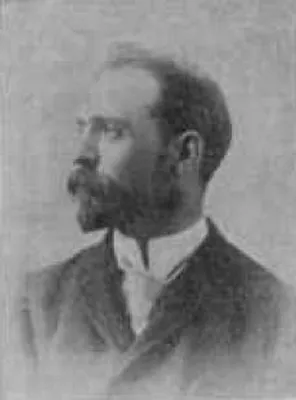 Photo: Robert Green Ingersoll, via josephhaworth.com
When Robert was nine, his father died suddenly, leaving the family destitute. His mother, unable to care for her children alone, scattered them among relatives. Robert found himself effectively orphaned, bouncing between households where he was more burden than blessing.
The stutter that had plagued him since childhood grew worse under stress. In an era when public speaking was the mark of an educated man, Robert seemed destined for silence. But isolation, it turned out, was exactly what he needed.
The Accidental Education
While other boys his age attended proper schools, Robert educated himself in the libraries of whatever town would have him. He devoured books on philosophy, science, and literature—subjects that his formal schooling had never touched. More importantly, he began to think for himself, developing the independent mind that would later make him famous.
The stutter forced him to choose his words carefully, to think before speaking, to make every syllable count. What seemed like a disability was actually training him to become a more precise, more powerful communicator than any smooth-talking orator who had never struggled for speech.
In his teens, Robert began practicing speeches alone in the woods, where no one could hear him stumble. He recited Shakespeare, memorized poetry, and gradually learned to control the rhythm of his breathing and the flow of his words. The boy who couldn't say his own name was teaching himself to command language.
The Breakthrough That Changed Everything
Ingersoll's transformation from stammering orphan to confident speaker wasn't sudden—it was painstaking. After teaching himself law through borrowed books, he opened a small practice in Illinois in 1854. His first court appearances were disasters. He would stand before judges, his carefully prepared arguments dissolving into stuttering fragments.
But failure, for Ingersoll, was just another form of education. He studied not just law, but the art of persuasion itself. He watched successful lawyers, analyzed their techniques, and slowly began to develop his own style—one that turned his supposed weaknesses into strengths.
His breakthrough came during a murder trial in 1860. Representing a man accused of killing his wife's lover, Ingersoll abandoned the formal, Latin-heavy rhetoric that was fashionable among lawyers. Instead, he spoke directly to the jury in plain language, telling a story that made them see his client not as a monster, but as a heartbroken husband driven to desperation.
The jury acquitted. More importantly, word began to spread about the lawyer who could make people feel as well as think.
From Courtroom to Stage
The Civil War interrupted Ingersoll's legal career, but it accelerated his development as a speaker. As a colonel in the Union Army, he learned to address large groups of soldiers, to inspire confidence in desperate situations, to make his voice heard over the chaos of camp life.
When he returned to civilian life, something had changed. The stutter was gone—not cured, but conquered. The boy who had once been unable to say his own name could now hold audiences spellbound for hours.
Ingersoll's reputation grew first through political speeches, then through lectures on literature, science, and philosophy. But what made him truly revolutionary was his willingness to challenge conventional wisdom, particularly about religion. In an era when questioning faith was social suicide, Ingersoll became known as "The Great Agnostic," drawing massive crowds to hear him respectfully but firmly dissect religious doctrine.
The Voice That Defined an Era
By the 1870s, Robert Ingersoll had become the most sought-after speaker in America. His lectures drew audiences of thousands, and his words were reprinted in newspapers across the country. Presidents sought his political support, intellectuals craved his approval, and ordinary Americans found in his speeches a voice for their own doubts and dreams.
What made Ingersoll so compelling was precisely what his childhood teacher had dismissed as weakness: his outsider status. Because he had never been accepted by the establishment, he could speak for those who felt excluded by it. Because he had struggled with his own voice, he understood the power of giving voice to the voiceless.
His most famous speech, "The Vision of War," delivered at veteran reunions across the country, captured the experience of Civil War soldiers with a poetry that no academic historian could match. Men who had fought at Gettysburg and Shiloh wept as Ingersoll transformed their memories of horror into something approaching art.
The Unlikely Revolutionary
Ingersoll's influence extended far beyond entertainment. His speeches on women's rights, racial equality, and scientific progress helped shape American thought during a crucial period of social change. He argued for ideas that wouldn't become mainstream for decades: that women deserved equal treatment, that science should guide policy, that individual conscience mattered more than social conformity.
All of this from a man who had once been told he would never speak in public. The stutter that had humiliated him as a child had taught him empathy for other outcasts. The poverty that had denied him formal education had freed him from conventional thinking. The abandonment that had left him alone had taught him to trust his own judgment.
The Legacy of the Stammering Orator
When Robert Ingersoll died in 1899, he was mourned as one of the great voices of his generation. Newspapers that had once attacked his religious skepticism praised his eloquence and integrity. The boy who couldn't say his own name had become the man whose words would be quoted long after his death.
But perhaps his greatest achievement was proving that authority doesn't have to come from credentials or connections—it can come from truth, courage, and the hard-won ability to speak for those who cannot speak for themselves.
Ingersoll's story reminds us that our greatest obstacles often become our greatest assets, if we're willing to work with them rather than against them. The stutter that nearly silenced him became the foundation of his power. The outsider status that excluded him from polite society made him the voice of everyone who had ever felt excluded.
In a world that often mistakes volume for wisdom and credentials for character, Robert Ingersoll's journey from stammering orphan to America's most trusted orator offers a different model of leadership—one built not on privilege, but on persistence; not on perfection, but on the courage to speak truth in a voice that others can recognize as their own.