Forty Thousand Books in a Chicken Coop
The rejection letters were brief. They were also, in their way, consistent. Too rural. Insufficient academic preparation. We encourage you to seek opportunities more suited to your background. Agnes Colley kept every one of them, at least for a while. Then, sometime in the early 1950s, she lit them on fire in her backyard in Harlan County, Kentucky, and got to work.
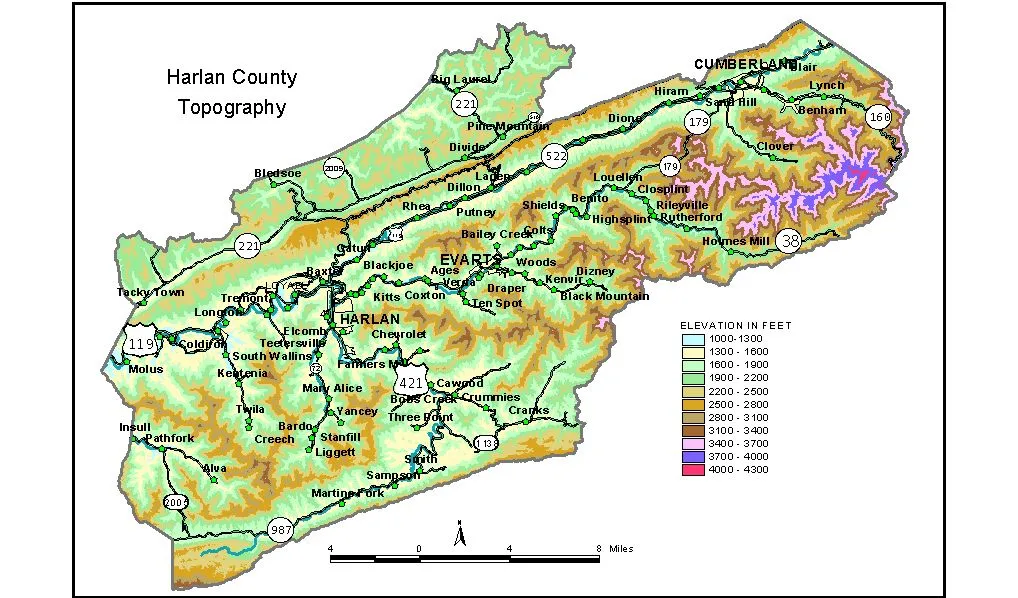 Photo: Harlan County, Kentucky, via kgs.uky.edu
What she built over the next three decades defies easy categorization. It was a library, yes — eventually housing more than forty thousand volumes in a structure that had previously sheltered chickens. But it was also a school, a community center, a quiet act of sustained defiance against every institution that had told her that books were not meant for people like her, or the people she grew up with.
The Wrong Kind of Credentials
Agnes Colley was born in 1921 in a small coal-mining community in the Cumberland Mountains. Her father worked the mines. Her mother kept a household that, by the standards of the era and region, was unusually bookish — a few shelves of worn volumes, a subscription to a mail-order book club that arrived months late and was passed between neighbors until the spines gave out.
Colley was a gifted student by any honest measure. She finished high school at the top of her class and applied, in the mid-1940s, to several university library programs in Kentucky and Tennessee. The responses she received were not outright hostile. They were something more insidious — politely dismissive, calibrated to discourage without quite saying why. The subtext was clear enough: library science, in that era, was understood as a profession for a particular kind of woman. Educated, urban, credentialed in the right ways. Colley was none of those things, at least not in the ways that counted to admissions committees.
She came home. She took a job teaching at a one-room schoolhouse. And she started thinking about what a library might look like if it was built for the people who had always been told it wasn't for them.
Starting From Nothing, Which Is Different From Starting From Zero
The chicken coop was her father's, on the family's small property outside of town. It was structurally sound if aesthetically unpromising — about four hundred square feet of rough board walls and a tin roof that drummed magnificently in a rainstorm. Colley spent the summer of 1951 cleaning it out, patching the gaps, building shelves from scavenged lumber, and writing letters.
She wrote to publishers. She wrote to estate lawyers handling the book collections of deceased academics. She wrote to county schools that were discarding outdated textbooks. She wrote to anyone she could think of who might have books they no longer needed. The response was slow and uneven — a box here, a crate there — but it was a response. Within two years, she had roughly three thousand volumes and a sign above the door that read, simply, FREE LENDING LIBRARY.
The sign was important. Not a lending library. A free lending library. In a community where discretionary income was largely theoretical, the distinction mattered enormously.
The Visitors Nobody Expected
Word of what Colley was doing traveled in ways she hadn't anticipated. By the late 1950s, she had begun receiving donations from outside the region — not just books, but occasional letters of encouragement from people who had heard about the library through the informal circuits of the American literary world.
Jesse Stuart, the Kentucky poet and novelist who had spent his own career chronicling Appalachian life, sent a collection of his own work along with a personal note. Harriette Arnow, whose novel The Dollmaker had brought national attention to the struggles of Appalachian migrants, corresponded with Colley for years and directed her publisher to send review copies. There were others — librarians in New York and Boston who quietly arranged for surplus volumes from their own collections to be boxed and shipped south.
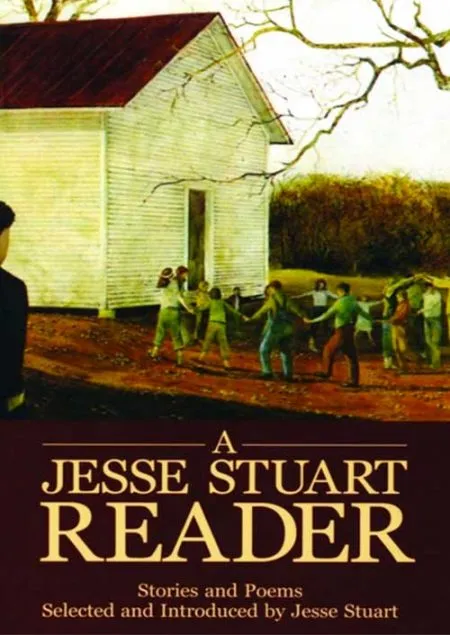 Photo: Jesse Stuart, via jsfbooks.com
None of this was organized. There was no foundation, no nonprofit structure, no grant funding in the early years. It was a network held together entirely by the recognition that something genuine was happening in that chicken coop in Harlan County.
Three Generations
By the time Colley retired in the early 1980s, the library had outgrown its original building twice, eventually occupying a purpose-built structure that a local contractor had helped raise largely at cost. The collection stood at just over forty thousand volumes. The borrowing records — which Colley had kept in handwritten ledgers with the same methodical consistency she applied to everything — documented tens of thousands of individual loans across three decades.
More than the numbers, though, was the texture of what the library had meant to the community. Former borrowers, interviewed by a University of Kentucky researcher in the 1990s, returned again and again to the same themes: the library as the first place they had felt that their curiosity was legitimate, that their desire to know things was not somehow embarrassing or out of place. Several credited specific books — discovered on Colley's shelves — with shaping their professional paths. Teachers. Nurses. One federal judge.
Colley herself was characteristically unimpressed by the attention. When the researcher asked her what she considered her greatest achievement, she thought for a moment and said she supposed it was that she had never once turned anyone away for not having the right credentials.
She had, after all, some experience with that particular brand of cruelty.
What the Rejection Letters Missed
The irony of Agnes Colley's story is not subtle. The institutions that turned her away for lacking the right preparation to be a librarian produced graduates who spent their careers managing collections. Colley, credentialless and unsupported, built one from scratch — and in doing so, served a community that credentialed librarians had largely failed to reach.
She is not in any textbook. She has no named fellowship, no endowed chair, no Wikipedia article of meaningful length. But in Harlan County, three generations of readers learned to love books in a building that used to smell like chickens, because a young woman decided that a rejection letter was not a verdict.
It was just a piece of paper. And she had always known what to do with those.