The Convict Who Taught America to Read the Sky
Seven Miles Above Certain Death
On September 5, 1862, James Glaisher was dying in a wicker basket seven miles above the English countryside. The balloon that carried him had climbed so high that the air was too thin to breathe, the cold so intense that his instruments were freezing, and the atmospheric pressure so low that his blood was literally beginning to boil. His companion had already passed out. Glaisher himself was losing consciousness, his vision fading to black as he fumbled with scientific instruments that might record humanity's first glimpse into the hostile realm above the clouds.
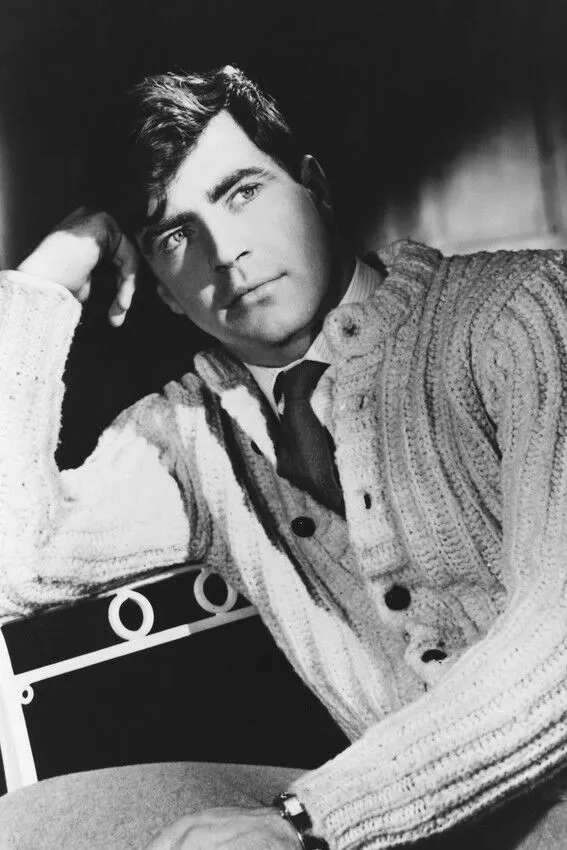
 Photo: James Glaisher, via livedoor.blogimg.jp
This was either the most important scientific experiment of the 19th century or the most elaborate suicide attempt in history. For Glaisher, who had spent his entire career being dismissed by the scientific establishment, it was probably both.
What happened in those terrifying minutes above England would eventually transform how Americans check the weather on their phones, plan their vacations, and prepare for storms. The man who nearly died in a balloon basket became the unlikely father of modern meteorology—and his influence reached across the Atlantic to help create the forecasting system that keeps America's skies readable.
From Prisoner to Prophet
Glaisher's path to scientific immortality began in the most unlikely place: a debtors' prison. His father, a watchmaker who had fallen on hard times, was imprisoned for unpaid debts, and young James grew up visiting him behind bars. The experience taught Glaisher that respectability and security were fragile things, easily lost and hard to regain. It also taught him that sometimes the most important discoveries come from people who have nothing left to lose.
With no family connections to smooth his way into the scientific establishment, Glaisher was forced to educate himself. He devoured books on mathematics, astronomy, and natural philosophy, teaching himself calculus from textbooks and conducting experiments with homemade instruments. When he finally landed a position at the Royal Observatory at Greenwich, it was as a lowly assistant—the kind of job reserved for people who were smart enough to be useful but not well-connected enough to be promoted.
 Photo: Royal Observatory at Greenwich, via uploads-ssl.webflow.com
But Glaisher had advantages that his better-credentialed colleagues lacked: desperate ambition, relentless curiosity, and the willingness to risk everything for a chance at discovery. While other scientists made careful, incremental advances from the safety of their laboratories, Glaisher was planning something unprecedented: to climb higher into the atmosphere than any human being had ever gone.
The Balloon That Changed Everything
In the 1860s, meteorology was more art than science. Weather prediction relied on folklore, superstition, and the kind of educated guessing that was right just often enough to maintain credibility. Scientists understood that weather happened in the atmosphere, but they had no way to study atmospheric conditions directly. The highest mountains provided some data, but they were isolated peaks that didn't represent the vast, three-dimensional ocean of air that surrounded the planet.
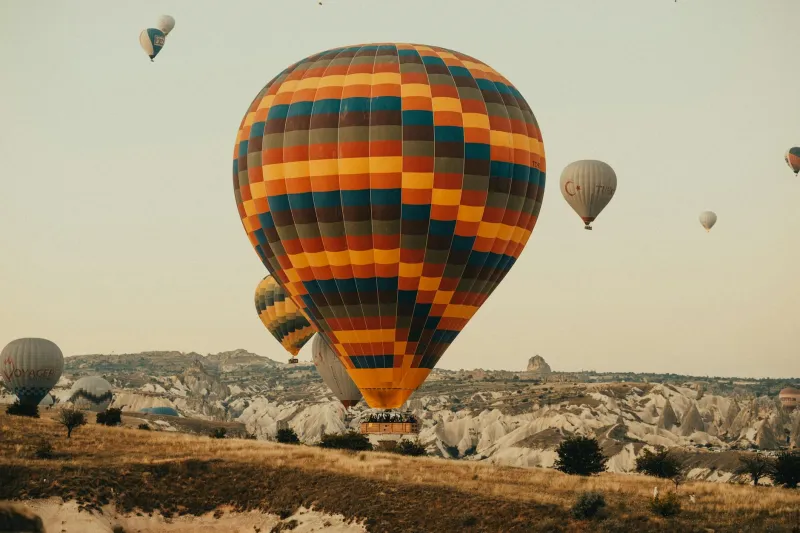
Glaisher's solution was audacious: he would use hot air balloons to carry scientific instruments directly into the atmosphere, recording temperature, pressure, humidity, and wind conditions at altitudes no human had ever reached. The plan was so dangerous that most of his colleagues thought it was insane. The plan was so expensive that most institutions refused to fund it. The plan was so unprecedented that no one really knew if it would work.
That's exactly why Glaisher was the right person to try it.
Working with professional balloonist Henry Coxwell, Glaisher began a series of ascents that pushed higher and higher into the atmosphere. Each flight was a gamble with death—balloon technology was primitive, safety equipment was nonexistent, and a single equipment failure or navigational error could send them plummeting to earth or drifting helplessly into the North Sea.
The Flight That Nearly Ended Everything
The September 5th flight was supposed to be Glaisher's crowning achievement: an attempt to reach 30,000 feet, higher than any human had ever climbed. As the balloon rose through the clouds, Glaisher methodically recorded his observations: temperature dropping rapidly, atmospheric pressure falling, his own pulse becoming irregular as the thin air made his heart work harder.
At 25,000 feet, the cold was so intense that his ink froze. At 29,000 feet, Coxwell's hands were so numb he couldn't operate the balloon's controls. At 32,000 feet—nearly seven miles above sea level—both men were losing consciousness.
This was the moment when Glaisher's lifelong preparation for disaster paid off. Even as his vision faded and his breathing became labored, he continued taking measurements, recording observations that would prove crucial for understanding how the atmosphere behaved at extreme altitudes. When he finally lost consciousness, his last act was to carefully note the time and altitude in his logbook.
Coxwell managed to bring the balloon down safely, but barely. They had climbed higher than Mount Everest, into air so thin that commercial aircraft now require pressurized cabins to keep passengers alive. They had survived an experience that would have killed most people, and they had brought back data that would revolutionize meteorology.
 Photo: Mount Everest, via everesticeandwater.com
The American Connection
Glaisher's balloon flights captured international attention, including from American scientists who were struggling with their own meteorological challenges. The United States, with its vast territory and extreme weather variations, desperately needed better forecasting capabilities. Farmers needed to know when storms were coming. Ships needed to avoid dangerous weather at sea. The growing railroad network needed to operate safely in all conditions.
American meteorologist Cleveland Abbe, who would later become known as the father of the National Weather Service, corresponded extensively with Glaisher and incorporated his atmospheric research into the first systematic weather forecasting service in the United States. Glaisher's high-altitude data helped Abbe understand how weather systems formed and moved, leading to the first reliable storm warnings and weather predictions in American history.
When President Ulysses S. Grant signed legislation creating the National Weather Service in 1870, the new agency was built on scientific principles that traced directly back to Glaisher's terrifying balloon flights. The man who had nearly died in a wicker basket above England had helped give Americans their first reliable way to read the sky.
The Legacy Written in Air
Glaisher continued his atmospheric research for decades, making over 1,000 balloon flights and establishing the scientific foundation for modern meteorology. His work helped explain how storms formed, how air masses moved, and how the atmosphere's vertical structure influenced weather patterns. Every weather forecast, every storm warning, every climate model used today builds on discoveries that Glaisher made while risking his life in primitive balloons.
But perhaps Glaisher's most important legacy was proving that transformative science often comes from people willing to go where others fear to tread. He showed that the most valuable discoveries might require not just intelligence and training, but courage and desperation—the willingness to bet everything on a single, terrifying experiment.
Today, when Americans check their weather apps or receive storm warnings on their phones, they're benefiting from a chain of scientific progress that began with a self-taught meteorologist who climbed higher into the sky than anyone thought possible. The forecasts that help us plan our lives, protect our property, and stay safe in severe weather all trace back to those few minutes when James Glaisher was dying seven miles above the earth, taking notes until his consciousness faded.
It turns out that sometimes the best way to understand the world is to leave it behind entirely—and trust that you'll survive long enough to tell the story.