Nobody Believed Him. He Told Them Anyway.
In the winter of 1942, a young Pole with hollow cheeks and a borrowed suit sat across from Felix Frankfurter, one of the most brilliant legal minds in America and a sitting Supreme Court Justice. Jan Karski had just finished describing, in precise and devastating detail, what he had personally witnessed inside the Warsaw Ghetto and a Nazi transit camp — the starvation, the mass killings, the industrial erasure of an entire people.
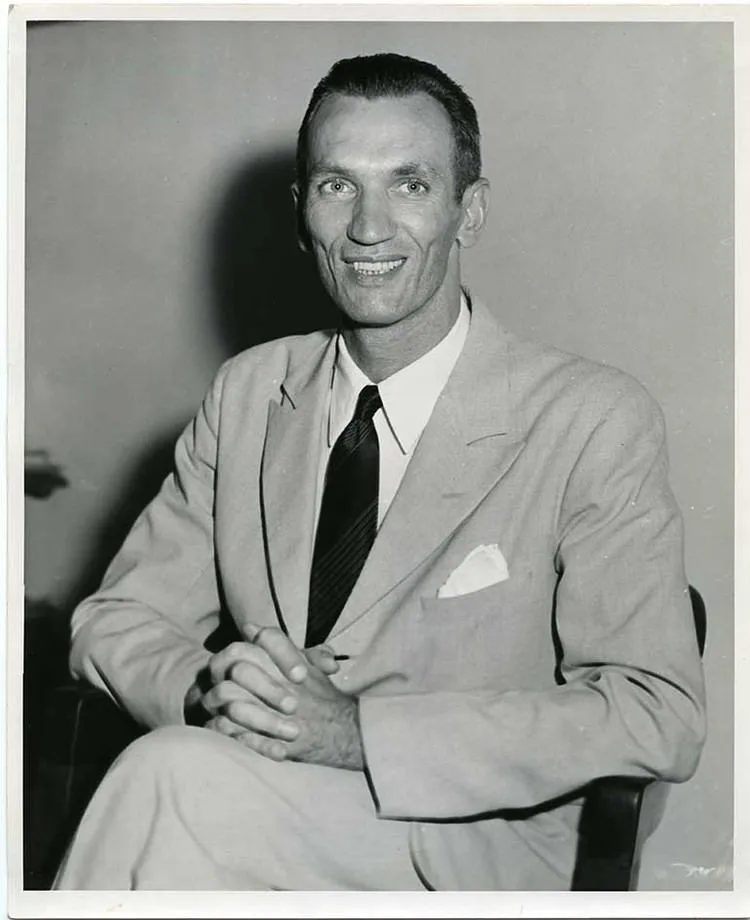 Photo: Jan Karski, via alchetron.com
Frankfurter listened. Then he stood, walked slowly around the room, and said: "I am unable to believe you."
Not that Karski was lying. Just that the human mind — even a great one — could not absorb what he was saying.
Karski nodded. And then he went to tell someone else.
The Long Road to the Room Where Nobody Listened
Jan Karski was born Jan Kozielewski in Łódź, Poland, in 1914. He was a gifted student, eventually earning a law degree and joining the Polish foreign service, but the war swallowed all of that whole. When Germany invaded in 1939, he was captured, escaped, was captured again by the Soviets, escaped again, and eventually found his way into the Polish Underground — one of the most dangerous organizations in occupied Europe.
His job, essentially, was to be a human hard drive. He memorized documents, carried microfilm hidden in the false bottoms of everyday objects, and crossed borders that other men wouldn't approach. He was caught and tortured by the Gestapo in 1940. He attempted suicide rather than risk breaking under interrogation. Underground operatives rescued him from a hospital window.
None of this made him famous. None of it earned him credentials that the powerful recognized. He was, in the eyes of Western diplomats and Allied officials, a courier. A messenger. A nobody from a country that had already been swallowed.
Into the Dark
In 1942, Jewish leaders in Poland made an unusual request. They asked Karski — this anonymous young courier — to do something no one else had managed: to go inside the Warsaw Ghetto and a transit camp, witness what was happening, and carry that testimony personally to the leaders of the free world.
He agreed.
What he saw inside those places never fully left him. He described the ghetto as a place where the dead were stacked in doorways because the living had no energy to move them. He witnessed deportations at the transit camp — people beaten, packed into freight cars with no water or air, doors sealed. He understood, in a way that no diplomatic cable could convey, that this was not a side effect of war. It was a deliberate, organized extermination.
He memorized everything. And then he carried it west.
The Tour of Closed Doors
Karski reached London in late 1942 and began a remarkable — and remarkably frustrating — series of meetings with Allied leaders, politicians, and intellectuals. He met with Anthony Eden, the British Foreign Secretary. He met with members of the Polish government-in-exile. He met with journalists. He met with Jewish leaders in England and the United States.
He told them all the same thing: this is not rumor. I was there. I saw it with my own eyes.
The responses ranged from discomfort to polite disbelief to outright dismissal. Some officials thanked him for his bravery and moved on to other business. Others suggested he might be exaggerating. The sheer scale of what he described seemed, to many, impossible to accept as literal fact.
Karski was not a diplomat. He had no rank, no official standing, no country behind him — Poland had ceased to exist as a functioning state. He was a man asking the world to believe something that the world found easier to set aside.
He kept going.
Fourteen Minutes in the Oval Office
In July 1943, Jan Karski sat down with Franklin Delano Roosevelt in the Oval Office. He had traveled across an ocean and through a labyrinth of bureaucratic gatekeeping to get to this chair. Roosevelt, characteristically charming and utterly in command of the room, asked him several questions — about conditions in Poland, about the morale of the Underground, about horses and farming.
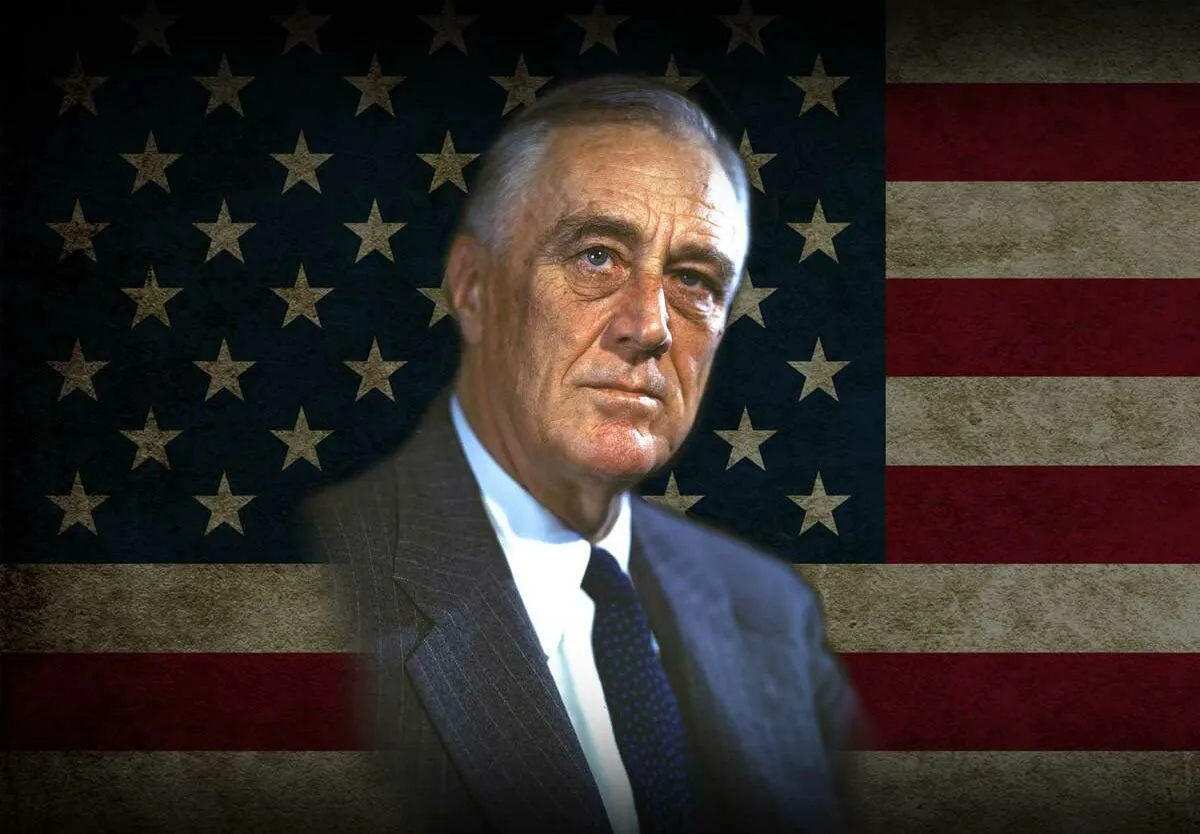 Photo: Franklin Delano Roosevelt, via nationaltoday.com
On the subject of the Jews, he listened, nodded, and asked no follow-up questions.
The meeting lasted roughly fourteen minutes.
Karski left Washington without knowing whether anything he had said would matter. He wrote a book — Story of a Secret State, published in 1944 — which became a bestseller. He gave lectures. He continued talking.
But the systematic murder he had witnessed continued until the Allied victory in 1945. The trains kept running. The camps kept operating. The world, by and large, had heard him and chosen not to act.
What Persistence Without Power Looks Like
After the war, Karski did something that might be the most quietly remarkable part of his story. He didn't retreat into bitterness. He earned a PhD from Georgetown University, became a professor, and spent decades teaching international relations — shaping the minds of American diplomats and policymakers for nearly forty years.
For a long time, he barely spoke publicly about what he had witnessed. The weight of it, and the weight of having been disbelieved, was enormous. It wasn't until the 1980s, when filmmaker Claude Lanzmann interviewed him for the landmark documentary Shoah, that Karski broke down on camera — the first time he had wept publicly about his wartime experiences.
The footage is almost unbearable to watch. And completely necessary.
In 1994, he received the Presidential Medal of Freedom. Poland awarded him its highest honors. Yad Vashem recognized him as one of the Righteous Among the Nations. He died in 2000, at 86, in Washington D.C. — the city where a president had once given him fourteen minutes and moved on to other things.
The Lesson of the Unlikely Messenger
Jan Karski's story is not a simple triumph. He didn't save the people he witnessed being murdered. The powerful men he briefed did not rise to the moment he offered them. By any conventional measure of impact, his mission failed.
And yet.
He established, permanently and beyond dispute, that the Allied leadership knew. That the information existed. That a man with no credentials, no army, and no political leverage had personally placed the truth in the hands of those who could have acted — and that they chose not to.
That is its own kind of consequence. A moral accounting that history could not later escape.
Karski didn't change the war. But he refused to let the world pretend it hadn't been warned. He walked into rooms where he didn't belong, told stories that powerful people found inconvenient, and kept going when every door closed in his face.
Sometimes the most important thing an unlikely person can do is simply refuse to stop talking.