The Doctor Who Got It Wrong — and Saved Thousands Getting It Right
Photo: Steve Shook from Moscow, Idaho, USA, CC BY 2.0, via Wikimedia Commons
Progress rarely arrives the way we imagine it — through a sudden flash of insight, a visionary standing at a podium with the answer already worked out. More often, it arrives through the back door: embarrassing, uncertain, reeking of prior failure. The story of Dr. Clarence Aldrich of Benton Falls, Missouri is a case study in exactly that kind of progress — the kind that begins with a mistake and ends with something that outlasts everyone involved.
 Photo: Benton Falls, Missouri, via 4.bp.blogspot.com
In the fall of 1887, Benton Falls was a prosperous-enough river town of about four thousand people, built on grain trade and cattle shipping. It had a main street, a newspaper, two churches, a hotel, and a drinking water supply that came, as was common for towns of its size and era, from a shallow municipal well fed by the same river basin that received the town's waste. Nobody thought much about this arrangement. It was simply how towns worked.
Aldrich had been practicing in Benton Falls for eleven years. He was, by the accounts of neighbors and patients, a careful and methodical man — not brilliant in the way that medical legend tends to require, but genuinely conscientious. He kept detailed notes. He followed his cases. He read the journals when he could get them.
The Outbreak
In October of 1887, people started getting sick. The symptoms were gastrointestinal — cramping, fever, severe diarrhea — and they spread through the town with a speed that alarmed Aldrich almost immediately. By the third week of October, he had seen forty-three cases. Three people had died.
His initial diagnosis was typhoid fever. It was a reasonable conclusion. Typhoid was common in river towns, the symptoms were consistent, and Aldrich had seen it before. He reported his findings to the town council, recommended quarantine measures for the affected households, and prescribed the standard treatments of the period.
The quarantine did essentially nothing. Cases kept coming. By November, the count had passed a hundred.
Aldrich went back to his notes. He mapped the cases geographically, a technique he had read about in a British medical journal published a few years earlier describing the work of John Snow in London. The pattern he found was troubling. The cases were not clustering around the households he had quarantined. They were clustering around a specific part of town — the neighborhoods closest to the main municipal well.
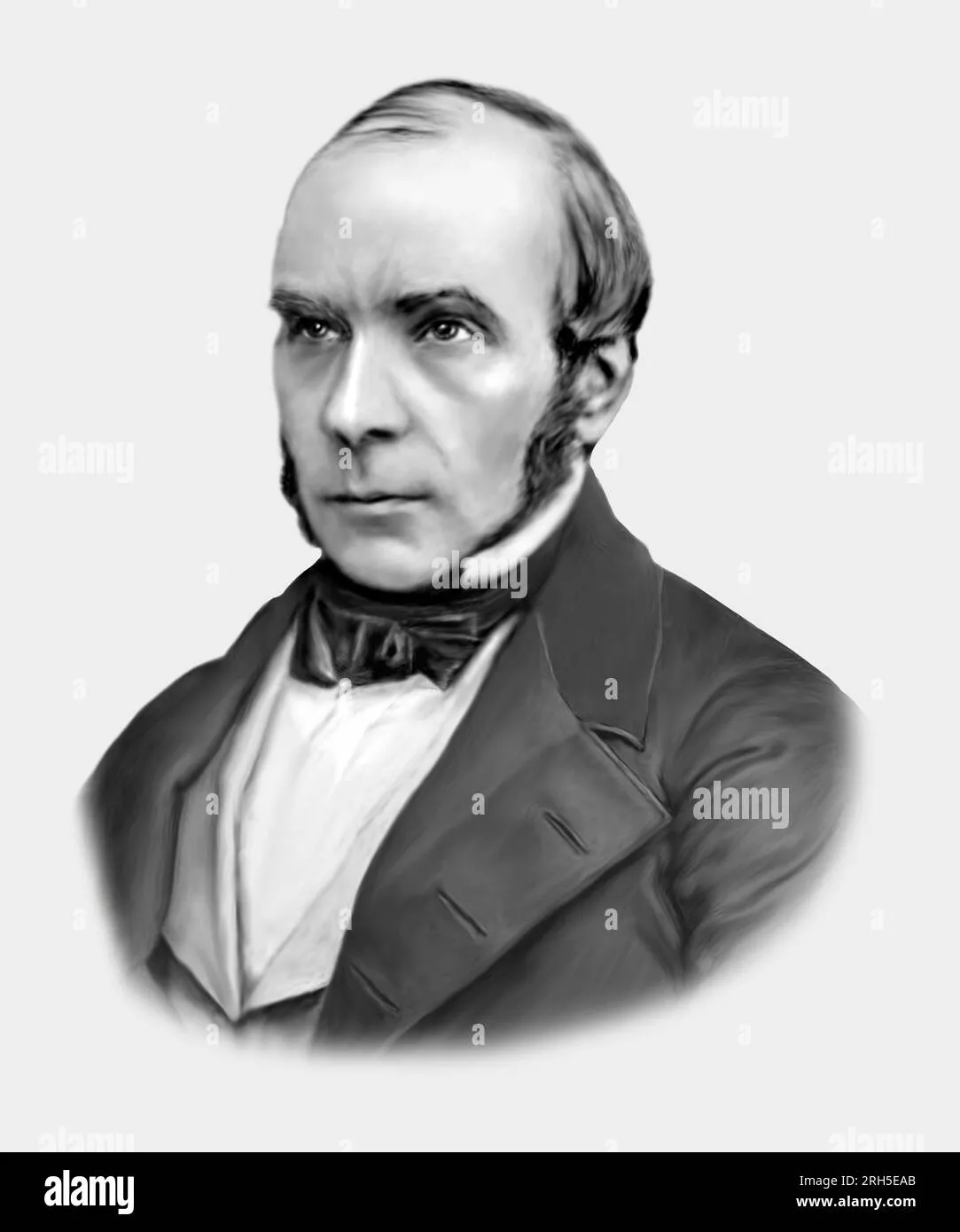 Photo: John Snow, via c8.alamy.com
The Admission That Changed Everything
What Aldrich did next was, in the context of small-town professional culture in 1887, genuinely courageous. He went back to the town council and told them he had been wrong.
Not entirely wrong — the illness was still likely waterborne. But the pathogen was almost certainly not typhoid in the classical sense. He had been treating it as a disease of person-to-person transmission when the evidence now pointed clearly toward a contaminated water source. The quarantines were useless. The well was the problem.
The council was not pleased. Aldrich's revised diagnosis meant that the town's water supply — an infrastructure investment that represented both civic pride and considerable public expense — was making people sick. It meant, potentially, that the town bore some responsibility for the deaths that had already occurred. It meant money, disruption, and the kind of public embarrassment that small-town politicians spend entire careers avoiding.
Several council members pushed back hard. One reportedly suggested that Aldrich was covering his own initial error by inventing a new theory. Another argued that the well had served the town for fifteen years without incident and that one doctor's revised opinion was insufficient grounds for action.
Aldrich was undeterred. He kept investigating.
Following the Water
Working largely on his own time and at his own expense, Aldrich spent the winter of 1887 to 1888 conducting what amounted to one of the first systematic environmental health investigations west of the Mississippi. He collected water samples. He interviewed residents about their water use habits. He traced the geography of the well's catchment area and discovered, about a quarter mile upstream, a drainage channel that ran directly from the town's primary waste disposal site into the same aquifer feeding the well.
The connection was, once he found it, almost absurdly direct. The town had essentially been drinking a diluted version of its own waste for years. The current outbreak had likely been triggered by an unusually wet autumn that had increased the flow rate through the drainage channel, concentrating the contamination.
He presented these findings to the council in February of 1888, this time with documentation thorough enough to be difficult to dismiss. He also brought in a state health official from Jefferson City — a move that shifted the pressure calculus considerably. A local doctor could be ignored. A state official asking questions about municipal negligence was a different matter.
The Reluctant Revolution
Benton Falls broke ground on a new water filtration and distribution system in the spring of 1888. It was not the first such system in Missouri, but it was among the earliest in a town of its size to be built specifically in response to identified contamination rather than simply as a growth infrastructure project. The design incorporated a slow-sand filtration bed — a technology that had been used in some eastern cities but was still novel in the rural Midwest.
The outbreak effectively ended within months of the new system coming online. Aldrich documented the decline in cases with the same methodical attention he had brought to mapping the original spread. His records, preserved in part through the Missouri State Historical Society, constitute one of the earliest examples of before-and-after epidemiological documentation in the region.
Word traveled, as medical news did in that era, through professional networks and regional journals. Aldrich wrote up his findings — including, with notable intellectual honesty, a full account of his initial misdiagnosis and the reasoning that had led him to revise it — and submitted the paper to a St. Louis medical journal. It was published in 1889.
The Lesson in the Mistake
What makes Aldrich's story worth telling is not that he was a visionary. He was not. His methods were improvised, his resources were thin, and his initial error cost time that, in a different outbreak, might have cost more lives. The part of the story that matters is what he did with the error once he recognized it.
In an era when professional reputation was fragile and public admission of mistake was culturally coded as weakness, he chose transparency over self-protection. He revised his position when the evidence demanded it. He documented his process, including the parts that reflected poorly on him, because he understood that the process itself was the useful thing — more useful, in the long run, than any individual conclusion.
The slow-sand filtration system in Benton Falls was eventually replaced by more modern infrastructure, as all such systems eventually are. The town itself has changed beyond recognition. But the chain of events that Aldrich set in motion — the mapping, the investigation, the reluctant municipal action, the published record — fed into the growing public health movement of the 1890s and early 1900s that would ultimately bring clean water to millions of Americans.
Progress, it turns out, does not always begin with brilliance. Sometimes it begins with a doctor looking at his notes, looking at his map, and having the rare courage to say: I think I got this wrong. Let's start over.