Woven Into the Nation: The Navajo Weaver Whose Art Shaped America's Soul
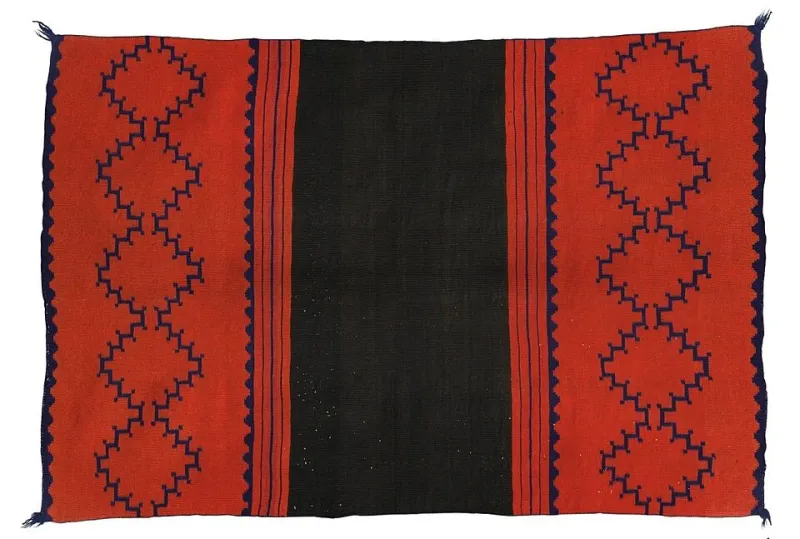
Photo: Navajo artist, Public domain, via Wikimedia Commons
Woven Into the Nation: The Navajo Weaver Whose Art Shaped America's Soul
In the early years of the twentieth century, a particular aesthetic hunger was spreading through America's wealthiest homes. The nation was young enough to be anxious about its own identity and old enough to want symbols of it. Collectors and decorators turned westward, toward the landscapes and peoples that seemed to embody something ancient and distinctly American — something that European antiques, however beautiful, could never supply. Into this moment stepped a woman whose name the history books largely forgot, though her work endured in the most visible rooms in the country.
Her Diné name translates roughly as "the woman who weaves with two minds" — a description offered by her granddaughter decades later and one that captures something essential about her life. She was born around 1878 on the Navajo Nation in what is now northeastern Arizona, at a time when the community was still rebuilding from the trauma of the Long Walk, the forced relocation of the 1860s that had shattered families and nearly extinguished the weaving tradition entirely.
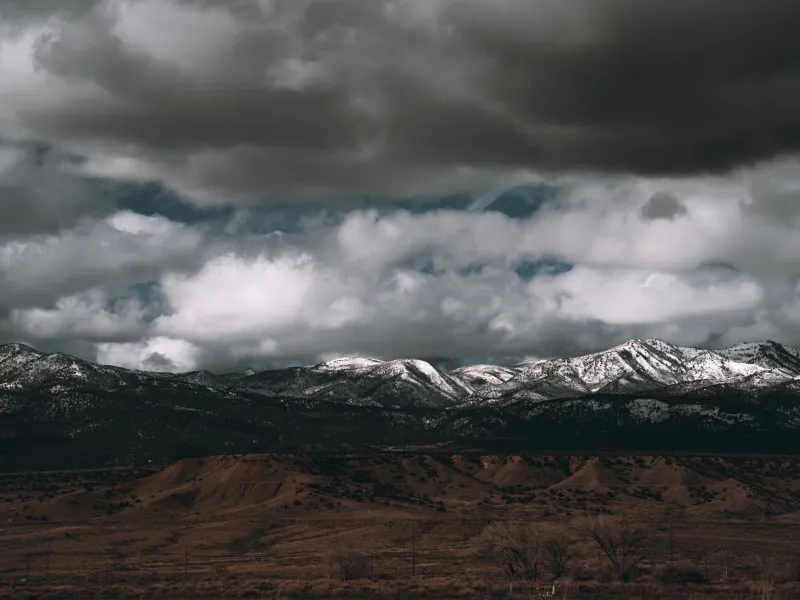
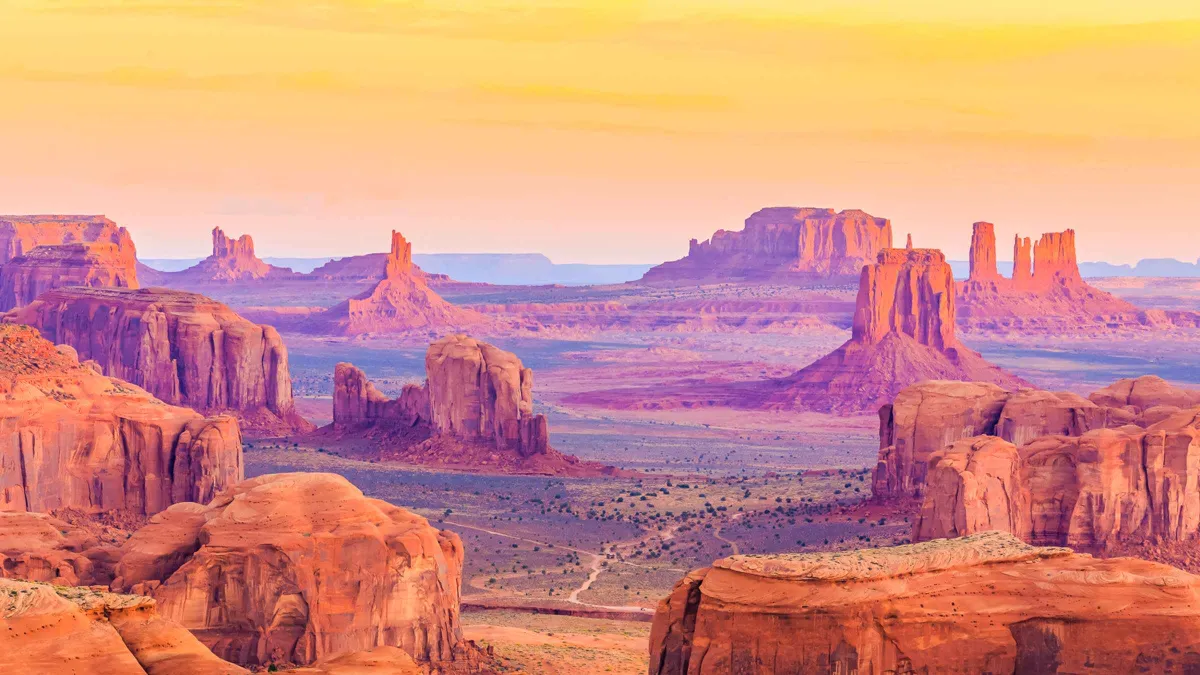 Photo: Navajo Nation, via cdn.getyourguide.com
She learned to weave from her mother on a traditional upright loom, producing blankets that served practical household purposes. What distinguished her early work, according to traders and collectors who encountered it in the 1900s, was an almost architectural quality — a sense of geometric precision that felt simultaneously ancient and modern, and a use of color that seemed to understand contrast the way a painter understands light.
The Trading Post Door
The path from the reservation to the parlors of Washington ran through a trading post, as it did for so many Navajo weavers of that era. The trading post system was a complicated institution — part economic lifeline, part exploitative intermediary. Traders extended credit, provided access to commercial dyes and materials, and served as brokers between weavers and the growing eastern market for Navajo textiles. They also set prices, controlled distribution, and often collected far more from buyers than they passed on to the makers.
The trader who first brought her work east was a man named Harlan Moorfield, who operated a post near Chinle and had developed a reputation among collectors for sourcing exceptional pieces. He recognized immediately that her rugs were different — not merely decorative but somehow authoritative, possessing what he described in a letter to a Santa Fe dealer as "the quality of something that has always existed and simply needed to be found."
 Photo: Harlan Moorfield, via reverseshot.org
Moorfield sold her first major rug to a Washington hostess for a sum that represented several months of trading post credit. The weaver received a fraction of that amount. She knew it. She accepted it, at least initially, because she had few alternatives and because she understood, with a clarity that Moorfield perhaps underestimated, that this was the opening of a door.
The Art That Spoke Without a Voice
By the 1910s, her rugs were appearing in the homes of people whose names appeared regularly in newspaper society columns. Interior decorators in New York and Washington began specifying her work by description — "the Chinle geometric style" — without knowing or particularly caring about the individual behind it. Her patterns were reproduced in design catalogs. Elements of her compositional approach appeared in the work of Arts and Crafts movement designers who had seen her textiles at exhibitions and absorbed their logic without attribution.
This is the particular cruelty of influence without credit: the work travels everywhere while the maker stays put. Her name was almost never printed. The rugs were sold as "authentic Navajo" or "traditional Southwest," categories that flattened individual artistry into cultural artifact. She was, in the commercial imagination of early twentieth-century America, a representative of a tradition rather than an author of an art.
And yet she was not passive in this. Those who knew her — traders, the occasional anthropologist who visited the region, later her own family members — described a woman of considerable strategic intelligence who understood the market she was operating in and made deliberate choices within its constraints.
Navigating the Contradiction
She began, gradually, to control what she could. She was selective about which pieces she allowed to leave. The rugs she sold through Moorfield were excellent. The rugs she kept, or gave to family, or traded within the community, were something else — more personal, more experimental, woven with patterns that carried meaning she had no interest in explaining to outside buyers.
She also began teaching. Not in any formal sense, but in the way knowledge moves in close communities — through demonstration, through correction, through the transmission of standards. A generation of weavers on the eastern Navajo Nation learned from her or from women she had taught, and the aesthetic she developed persisted long after the commercial market's appetite for it had moved on to the next fashionable thing.
There is a quiet kind of power in that. The market could sell her work without her name. It could not replicate her judgment, her eye, or the living tradition she was simultaneously practicing and extending.
What Was Taken, What Remained
The full accounting of what she earned versus what her work generated for traders, dealers, and collectors is impossible to reconstruct now. What is clear is the disproportion. A single rug that sold at a New York auction in 1923 for what the catalog described as a "record price for contemporary Native work" had been acquired from Moorfield's post for a sum that, adjusted for the period, would not have covered a week's groceries in the city where it was being celebrated.
She died in the early 1940s, still weaving, still teaching. The trading post system that had both enabled and constrained her career was already beginning to change, though not quickly enough and not entirely in the right directions.
What she left behind was not a legacy in the form that American culture tends to prefer — no biography, no retrospective exhibition during her lifetime, no feature in a national magazine. What she left was the work itself, scattered across the country in private collections and museum storerooms, much of it still unattributed, still cataloged as "Navajo, maker unknown."
The Pattern Persists
In recent years, Navajo cultural organizations and textile scholars have begun the painstaking work of reattribution — of returning names to objects that were stripped of them by a market that preferred the romance of anonymity to the inconvenience of individual authorship.
Her story is not a simple one of triumph over adversity, though there is triumph in it. It is a story about what happens when a nation reaches for an identity and finds it in the work of people it simultaneously celebrates and marginalizes. It is a story about the distance between admiration and respect.
And it is a story about a woman who understood that distance clearly, who worked within it without being diminished by it, and who wove something into the fabric of American visual culture that persists, stubbornly and beautifully, whether or not the culture has ever bothered to read the signature.