The Night Shift Champion: How a Chicago Custodian Conquered Chess Without Anyone Noticing

The Books Nobody Wanted
In 1943, the Chicago Public Library was throwing away chess books. Budget cuts meant anything that hadn't circulated in six months went straight to the dumpster. Clarence "Cuthbert" Johnson, working the night shift with a mop and bucket, saw opportunity where others saw trash.
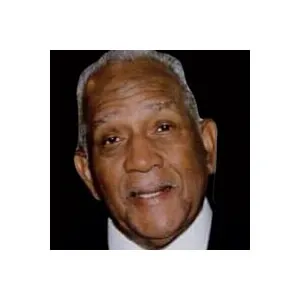 Photo: Clarence "Cuthbert" Johnson, via rceno.com
 Photo: Chicago Public Library, via www.fmsp.com
Johnson had been cleaning the Woodlawn branch for two years, arriving at 11 PM when the last patron left and working until dawn. The pay was steady—$18 a week—but the real education happened after midnight. While the city slept, Johnson spread rescued chess manuals across reading tables and taught himself the game that would make him legendary.
The irony wasn't lost on him. During the day, these same tables were off-limits to Black patrons in all but name. At night, with only security lights for company, Johnson had the entire library to himself.
Learning in the Dark
Johnson's chess education began with "Modern Chess Openings" and a biography of Paul Morphy. He'd found both books water-damaged in the discard pile, their pages warped but readable. Using a maintenance room as his study, Johnson memorized variations by flashlight, sketching positions on the back of time cards.
The breakthrough came six months later. A regular patron had left behind a chess set—missing three pawns but otherwise complete. Johnson carved replacements from soap and began playing out the games he'd been studying. Night after night, he worked through master games, moving pieces in the empty library while Chicago's South Side slept around him.
By winter 1944, Johnson was ready to test his knowledge against real opponents.
The Underground Circuit
Chicago's Black chess scene operated in barbershops, community centers, and church basements. Johnson found his first serious games at Bronzeville's Lincoln Center, where railroad porters and stockyard workers gathered on weekends to play for small stakes.
The custodian's arrival raised eyebrows. Johnson was quiet, methodical, and devastatingly effective. Within three months, he'd beaten every regular player in the room. Word spread quickly through Chicago's tight-knit chess community: there was a new player worth watching.
Johnson's reputation grew beyond Bronzeville. By 1945, he was traveling to tournaments across the Midwest, taking buses to Milwaukee, Detroit, and St. Louis. His results were remarkable—first place finishes that should have made national chess magazines. They didn't.
The Invisible Champion
The problem was documentation. Mainstream chess publications didn't cover "colored tournaments," as they were known. Johnson's victories happened in a parallel universe that white chess authorities pretended didn't exist. He could beat masters, win tournaments, and dominate entire regions without earning a single mention in "Chess Review" or "Chess Life."
This invisibility had practical consequences. Without published ratings or recognized titles, Johnson couldn't qualify for major tournaments. The U.S. Chess Federation's rating system, introduced in 1950, effectively started from scratch for Black players, ignoring years of competitive results.
Johnson adapted by creating his own opportunities. He organized exhibitions, challenged visiting masters to casual games, and mentored younger players who would eventually break into mainstream chess. But his own recognition remained elusive.
The Students Remember
Johnson's true legacy lived in the players he taught. Maurice Ashley, America's first Black chess grandmaster, discovered Johnson's story through older Chicago players who remembered the custodian's legendary games. "Everyone knew about Cuthbert," Ashley recalls. "He was the guy who could beat anyone but couldn't prove it."
 Photo: Maurice Ashley, via mauriceashley.com
Johnson's teaching style was methodical, patient, and focused on fundamentals. He emphasized position over tactics, understanding over memorization. Many of his students went on to successful competitive careers, carrying forward lessons learned in community centers and church basements.
The custodian continued working at the library until 1967, playing chess on weekends and teaching whenever someone showed interest. His personal records—scorebooks, analysis notes, and correspondence—disappeared after his death in 1973.
Reclaiming History
Today, chess historians are working to reconstruct Johnson's career from fragments. Tournament notices in Black newspapers, scorecards saved by opponents, and testimonies from surviving players paint a picture of sustained excellence that lasted nearly three decades.
The Chicago Chess Foundation recently named their youth program after Johnson, acknowledging a champion who deserved recognition decades ago. It's a small gesture toward correcting a historical record that ignored extraordinary achievement simply because it happened in the wrong skin color.
Johnson's story reminds us that excellence doesn't require an audience. In empty libraries and forgotten tournaments, greatness found its expression anyway. The tragedy isn't that Johnson lacked talent or opportunity—it's that America wasn't ready to see what he'd already accomplished.