The Math Letters That Changed Everything: How a Clerk's Midnight Calculations Stunned Cambridge

The Package That Defied Belief
Professor G.H. Hardy was used to receiving letters from amateur mathematicians. Most ended up in his wastebasket within minutes. But the package that arrived at Cambridge in January 1913 was different. Page after page of mathematical formulas filled nine sheets of paper—theorems so beautiful and complex they seemed to emerge from another dimension entirely.
The return address read: S. Ramanujan, Accounting Clerk, Port Trust Office, Madras, India.
Hardy later said it was like receiving a letter from an alien civilization. The mathematics were so advanced, so unprecedented, that he couldn't immediately tell if they were the work of a genius or a madman.
Sweeping Floors, Dreaming of Numbers
Srinivasa Ramanujan's path to mathematical greatness began in the most unlikely place imaginable: the floor of a government office where he worked as a low-level clerk earning twenty rupees a month. Born into a poor Tamil family in 1887, Ramanujan had shown exceptional promise in mathematics as a child. But poverty derailed his formal education when he failed his college exams—not because he lacked intelligence, but because he was so obsessed with mathematics that he ignored every other subject.
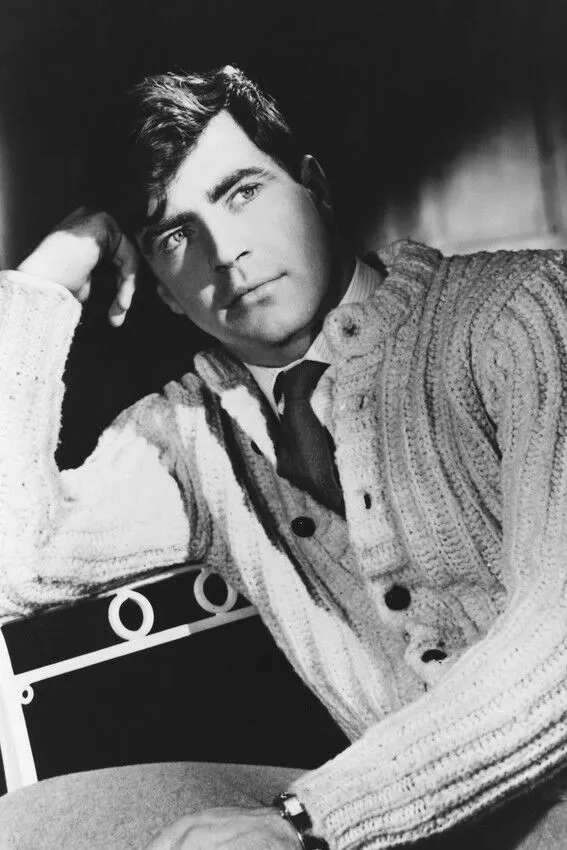
 Photo: Srinivasa Ramanujan, via www.clearias.com
While his classmates pursued traditional careers, Ramanujan found himself unemployed, married at nineteen, and desperately searching for work to support his family. The accounting job in Madras was supposed to be temporary—a way to pay the bills while he figured out his real future.
Instead, it became the unlikely launching pad for one of mathematics' greatest minds.
The Notebook That Started It All
Ramanujan's mathematical education came from a single book: "A Synopsis of Elementary Results in Pure and Applied Mathematics" by G.S. Carr. The book was already outdated when he found it, containing thousands of mathematical formulas with little explanation of how they were derived. Most students would have found it useless.
Ramanujan saw it as a treasure map.
Working by lamplight after his long days at the office, he began filling notebook after notebook with his own mathematical discoveries. He didn't just memorize Carr's formulas—he extended them, found patterns within patterns, and developed entirely new mathematical concepts that wouldn't be formally recognized by Western mathematics for decades.
His colleagues at the Port Trust Office thought he was eccentric at best, possibly unstable at worst. They'd find him scribbling equations during lunch breaks, covering slate boards with symbols that meant nothing to them but everything to him.
The Letter That Changed Two Lives
By 1913, Ramanujan had filled three notebooks with over 3,000 mathematical results. Encouraged by friends who recognized his extraordinary talent, he decided to write to prominent mathematicians in England. Most never replied. Hardy was different.
Hardy spent hours with his colleague J.E. Littlewood trying to understand what they were looking at. Some of the formulas were already known, proving Ramanujan's mathematical intuition. Others were completely original and clearly correct. But some were so far beyond current mathematical understanding that Hardy couldn't even begin to verify them.
"They must be true," Hardy famously said, "because if they were not true, no one would have had the imagination to invent them."
From Madras to Cambridge
Hardy immediately invited Ramanujan to Cambridge, but the journey from Indian clerk to British academic wasn't simple. Ramanujan was a devout Hindu vegetarian who had never left his home region. The prospect of crossing the ocean and living among foreigners terrified him.
It took a year of persuasion before Ramanujan finally agreed to make the journey. When he arrived in Cambridge in 1914, he was 26 years old, spoke limited English, and had never set foot in a formal mathematics classroom.
Within months, he was collaborating with some of the world's greatest mathematicians as an equal.
The Genius That Couldn't Be Taught
Ramanujan's time at Cambridge was both triumphant and tragic. His mathematical insights were so advanced that they're still being studied and applied today—his work on partition functions, modular forms, and infinite series laid groundwork for modern number theory, computer science, and even string theory.
But he struggled with the formal, proof-based approach of Western mathematics. Where his Cambridge colleagues demanded rigorous logical steps, Ramanujan worked through pure intuition, seeing mathematical truths as clearly as others see colors.
"An equation means nothing to me," he once said, "unless it expresses a thought of God."
The Notebooks That Keep Giving
Ramanujan returned to India in 1919, his health broken by the English climate and wartime food shortages. He died the following year at just 32, leaving behind notebooks filled with thousands more mathematical insights.
Those notebooks continue to yield discoveries today. In the 1970s and 1980s, mathematicians found that Ramanujan's seemingly mystical formulas provided practical solutions to problems in computer science and physics. His work on mock theta functions, dismissed as mathematical curiosities during his lifetime, turned out to be crucial for understanding black holes.
The accounting clerk who taught himself mathematics by candlelight had somehow intuited mathematical truths that wouldn't be formally understood for nearly a century.
The Unlikely Legacy
Ramanujan's story challenges everything we think we know about genius, education, and opportunity. He had no advanced degrees, no formal training, no research grants or institutional support. What he had was an unshakeable belief that mathematics was a language worth learning, even if he had to teach it to himself.
Today, the Ramanujan Prize recognizes young mathematicians from developing countries, ensuring that brilliance won't be overlooked simply because it emerges from unexpected places. His story reminds us that the next great breakthrough might come not from the most prestigious universities, but from someone working the night shift, filling notebooks with dreams that seem impossible until suddenly they're not.
The janitor who swept floors by day and mapped the universe by night proved that genius doesn't wait for permission—it just needs paper, pencil, and the stubborn faith that the impossible might actually be inevitable.