When America Needed a Miracle, a Crooked-Legged Horse Delivered
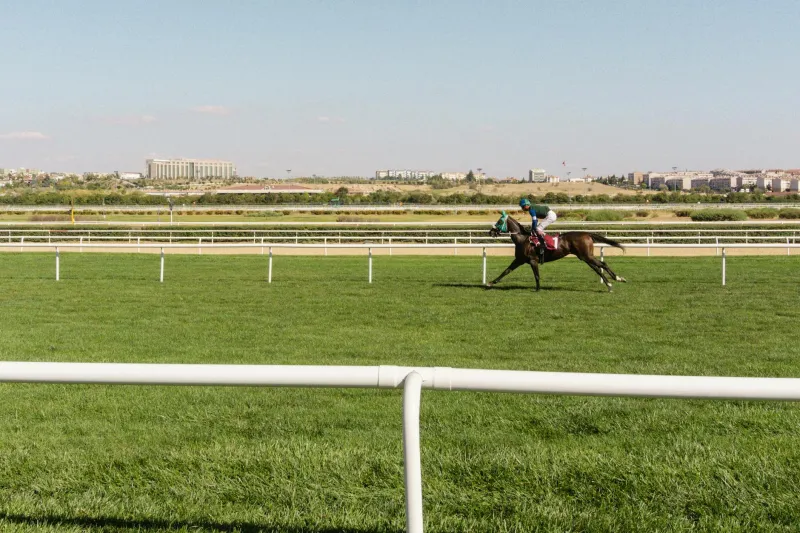
The Horse Nobody Wanted
Seabiscuit looked like a mistake. Short, stocky, with legs that bent outward and a lazy temperament that frustrated every trainer who worked with him, he was the kind of horse that serious racing people politely ignored. By age three, he'd lost more races than he'd won, spending most of his time as a training partner for horses with actual potential.
Then the Great Depression hit America like a sledgehammer, and suddenly everyone understood what it felt like to be written off.
A Nation of Underdogs
By 1938, Americans had endured nearly a decade of economic devastation. One in four workers had no job. Families lived in cardboard shantytowns called Hoovervilles. The American Dream felt like a cruel joke told by people who'd never stood in a breadline.
Into this landscape of broken promises stepped an unlikely trio: a failed businessman named Charles Howard who'd lost his son in a car accident, a half-blind jockey named Red Pollard who was too big for most horses, and a horse trainer named Tom Smith who talked more to animals than humans. Together, they saw something in Seabiscuit that the racing establishment had missed.
They saw themselves.
The Makeover That Changed Everything
Smith understood that Seabiscuit's problem wasn't ability—it was attitude. The horse had been overworked and underappreciated until he'd simply stopped trying. Sound familiar to anyone who'd been unemployed for three years?
Smith gave Seabiscuit what Depression-era America desperately needed: a second chance. He let the horse sleep late, eat well, and rediscover the joy of running. Slowly, Seabiscuit began winning races. Not just winning—dominating.
As word spread about the little horse with the big heart, something remarkable happened. Americans who couldn't afford groceries found money to bet on Seabiscuit. Families gathered around radios to hear his races. Children drew pictures of him in school.
A horse had become hope.
The Match Race of the Century
By 1938, Seabiscuit had conquered the West Coast, but the East Coast racing establishment remained skeptical. Their champion was War Admiral—a magnificent, perfectly proportioned horse who'd won the Triple Crown and looked like central casting's idea of a racehorse.
 Photo: War Admiral, via thiswascumbria.uk
When promoters finally arranged a match race between the two horses at Pimlico Race Course in Maryland, it became far more than a sporting event. It was a referendum on the American spirit.
War Admiral represented everything the country used to believe about success: breeding, pedigree, natural superiority. Seabiscuit represented everything Americans had become: scrappy, determined, and tired of being told they weren't good enough.
Forty Million Americans Hold Their Breath
On November 1, 1938, an estimated 40 million Americans—nearly one in three people—tuned in to hear the race on radio. Factories stopped production. Restaurants turned up their radios. In a country where most entertainment cost money people didn't have, Seabiscuit's races were free theater.
The race itself lasted just over two minutes, but those 120 seconds contained everything Americans needed to hear. Seabiscuit, carrying more weight and giving away four inches in height, stalked War Admiral for most of the race before pulling away in the stretch to win by four lengths.
The roar from the crowd at Pimlico could be heard for miles. But the real celebration was happening in living rooms, factories, and farm kitchens across America, where people who'd been told they were finished discovered they still knew how to cheer.
More Than a Horse
Seabiscuit's victory over War Admiral became the most-listened-to sporting event in American history to that point. But the horse's real triumph wasn't on the racetrack—it was in giving Americans permission to believe in comebacks again.
In a decade defined by failure, Seabiscuit proved that being counted out wasn't the same as being finished. His crooked legs became a symbol of imperfection that didn't prevent excellence. His late start reminded people that success didn't always come early.
Most importantly, his story suggested that in a country built on second chances, even the longest shots could still win.
The Psychology of Hope
What made Seabiscuit's appeal so powerful wasn't just his winning—it was his losing. Americans had watched him get beaten early in his career, just as they'd watched their own dreams get battered by economic reality. His comeback felt possible because it started from a place they recognized: rock bottom.
Unlike human athletes who might seem distant or superhuman, Seabiscuit's flaws were visible to everyone. His bent legs, his stubborn streak, his tendency to goof off—these weren't weaknesses to overcome but proof that imperfect beings could achieve perfect moments.
The Lasting Legacy
Seabiscuit retired in 1940, but his impact on American culture lasted far beyond his racing career. He'd proven that in the darkest times, heroes could emerge from the most unlikely places. He'd shown that sometimes what a country needs isn't a perfect champion but a flawed one who refuses to quit.
Today, when Americans face new challenges and uncertainty, Seabiscuit's story remains relevant. Not because we need another horse, but because we need another reminder that being an underdog isn't a disadvantage—it's just another way to start the race.
In 1938, America needed to believe that broken things could be fixed, that discarded dreams could be redeemed, and that the finish line belonged to whoever wanted it most. A crooked-legged horse from California delivered that belief in the most unlikely package imaginable.
Sometimes that's exactly how miracles work.