From Small-Town Stock Boy to the Courtroom Warrior America Feared Most
In the summer of 1878, a lanky 21-year-old named Clarence Darrow was stacking canned goods and sweeping sawdust off the floors of a country store in Kinsman, Ohio. His hands were rough from hauling grain sacks, his back ached from long days behind the counter, and his future looked as predictable as the rhythm of small-town commerce. Nobody—least of all Darrow himself—could have imagined that this grocery boy would grow up to become the lawyer that judges feared, prosecutors dreaded, and the condemned prayed for.
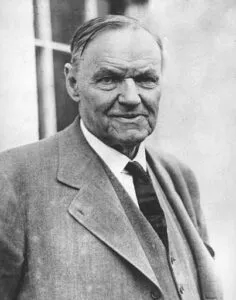 Photo: Clarence Darrow, via firstamendment.mtsu.edu
The Unlikely Education of a Future Legend
Darrow's path to legal greatness began not in the hallowed halls of Harvard or Yale, but in the cramped quarters above his father's carpentry shop. His father, Amirus Darrow, was a village oddball—a furniture maker who read philosophy and questioned everything, including God. In a town where conformity was currency, the Darrow family was perpetually broke and perpetually suspect.
While his wealthy classmates prepared for prestigious universities, young Clarence bounced between odd jobs. He taught in a one-room schoolhouse for three dollars a week, sold insurance door-to-door, and yes, stocked shelves at the local mercantile. Each job was a masterclass in reading people—skills no law school curriculum could replicate.
"I learned more about human nature behind that counter than I ever did in a courtroom," Darrow would later reflect. He watched desperate farmers negotiate for credit, witnessed families choose between medicine and food, and saw how the law—as enforced by local authorities—always seemed to favor those with the deepest pockets.
The Accidental Attorney
Darrow's entry into law was almost comically haphazard. After a single year at the University of Michigan Law School (which he couldn't afford to finish), he convinced a local attorney to let him study in his office while sweeping floors and filing papers. It was less formal apprenticeship than extended internship, but it worked. In 1878, at age 21, he passed the Ohio bar exam.
What happened next would have been impossible for a graduate of an elite law school: Darrow stayed in Kinsman and opened a practice defending the people he'd grown up with. Farmers facing foreclosure. Workers injured on the job. Anyone who couldn't afford a "real" lawyer got Clarence Darrow—and often discovered they'd gotten something better.
The Move That Changed Everything
In 1887, Darrow made the leap to Chicago, a city exploding with opportunity and inequality in equal measure. But instead of chasing corporate clients or joining a prestigious firm, he gravitationally pulled toward the same kinds of cases he'd handled in Ohio—just bigger and more consequential.
His breakthrough came during the Pullman Strike of 1894, when he abandoned a comfortable corporate position to defend Eugene Debs, the labor leader facing federal charges. It was professional suicide by conventional standards. Darrow didn't care. "I have always been on the side of the underdog," he said, "because I was one."
The Grocery Boy's Greatest Weapon
What made Darrow so dangerous in a courtroom wasn't his legal training—it was his grocery store education. He understood that juries weren't made up of judges and law professors, but of people like those he'd served behind the counter in Kinsman. He spoke their language, understood their fears, and shared their suspicions of authority.
While his opponents quoted Latin and cited obscure precedents, Darrow told stories. He painted pictures. He made twelve strangers see themselves in the defendant's shoes, because he'd once stood in those shoes himself.
The Cases That Defined a Career
The Scopes "Monkey" Trial of 1925 showcased everything that made Darrow unique. When the small town of Dayton, Tennessee, put evolution on trial, most attorneys would have focused on legal technicalities. Darrow understood something deeper: this was a clash between the educated elite and ordinary Americans, between progress and tradition, between the cosmopolitan and the provincial.
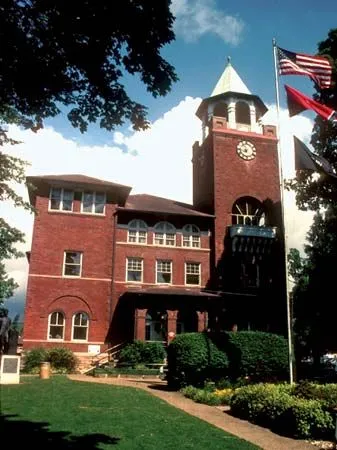 Photo: Dayton, Tennessee, via cdn.britannica.com
He'd lived on both sides of that divide. The grocery boy from Kinsman could speak to rural fears about a changing world, while the self-made attorney could articulate why that change was necessary. When he cross-examined William Jennings Bryan, it wasn't just lawyer questioning witness—it was the future confronting the past, with Darrow serving as translator for both sides.
The Legacy of the Unlikely Lawyer
By the time of his death in 1938, Darrow had defended over 100 people charged with murder, losing only one to execution. He'd taken on the most hopeless cases, the most despised defendants, the most unpopular causes—and won far more often than anyone thought possible.
But perhaps his greatest victory was proving that American justice didn't have to be the exclusive province of the privileged. The grocery boy from Ohio had shown that sometimes the best lawyers aren't made in ivory towers, but in the real world—behind counters, in classrooms, among the people they'd eventually defend.
"I have never killed a man, but I have read many obituaries with great pleasure," Darrow once quipped about his prosecutorial opponents. It was vintage Darrow: irreverent, slightly shocking, and absolutely effective. The grocery boy had learned how to make people listen, and America would never be quite the same.