The Kid From the Wrong Family Who Became the Voice America Believed
The Name That Opened No Doors
There are names that open doors in this country, and names that close them. He had the second kind.
His father had made money the wrong way — the kind of wrong that ends in federal charges, courtrooms, and newspaper coverage that follows a family for generations. By the time the son was old enough to want a career in journalism, a profession built entirely on the currency of credibility, the family name was a liability so heavy it was almost architectural. It didn't just block opportunities. It defined him before he could define himself.
Newsrooms turned him away. Some didn't bother to explain. Others were polite about it in the way that people are polite when they've already made up their minds. A few were direct: we can't have that name attached to this organization. Come back when you're someone else.
The problem, of course, was that he couldn't be someone else. He could only figure out how to be more fully himself — and trust that eventually, that would be enough.
What Shame Does to a Storyteller
Growing up in the shadow of a parent's disgrace does something specific to a person's relationship with truth. You become acutely aware of the gap between appearance and reality. You develop a finely tuned sensitivity to the difference between what people say publicly and what they actually believe. You learn, early and involuntarily, that reputation is constructed — that it can be built, and that it can be destroyed — and that the official version of events is rarely the complete one.
For someone drawn to journalism, these are not entirely bad instincts to have. They're actually close to the core of what good reporting requires.
But they come wrapped in a particular kind of pain. And the question of what to do with that pain — whether to hide it, run from it, or somehow transmute it into something useful — is one that defines the arc of a life.
The broadcaster who grew up as the bootlegger's son chose, eventually, to use it. Not as a confession or a therapy session, but as the engine behind a relentless, almost compulsive need to get the story right. To be believed. To build, one broadcast at a time, a record so clean that no one could look at it and see his father's shadow.
The Education Nobody Gave Him
Formal credentials were mostly unavailable to him in the early years. The schools that led to the good newsroom jobs weren't interested in his application, and the newsrooms themselves, as noted, had their own reservations. So he built his education sideways.
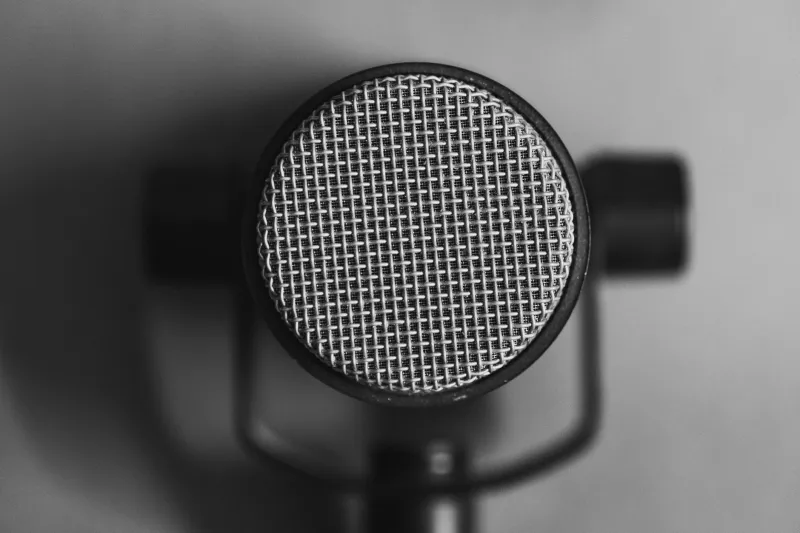
He took whatever work he could find at the edges of the media world — small radio stations in markets nobody wanted, filling time with local news and weather and whatever else kept the signal alive. He wrote copy for free when he couldn't get paid for it. He listened to the broadcasters he admired with the focused attention of someone studying a foreign language, breaking down their rhythms and their pauses and the way they handled silence.
He made mistakes in front of small audiences and corrected them before the audiences grew. He developed a voice — literally and figuratively — that was his own, not an imitation of the polished network sound he'd grown up hearing. Authenticity, it turned out, wasn't just a virtue. In his case, it was a strategy.
Because he couldn't borrow credibility from a prestigious institution or a famous mentor, he had to generate it from scratch. Every story he got right was a brick. Over years, those bricks became something.
The Reinvention Problem
There's a particular challenge in reinventing yourself when the thing you're running from is public knowledge. A private shame can be managed, compartmentalized, revealed on your own terms. A shame that lived in newspaper archives — that anyone could find with a library trip or, later, a search engine — required a different approach.
He didn't hide it. He couldn't. Instead, he developed a kind of preemptive transparency that, paradoxically, became one of his most disarming qualities. He was honest about where he came from in ways that made it harder for others to weaponize it. He talked about his father with a complexity that refused easy condemnation or easy sympathy. He made his origin story part of his story — not the whole thing, but an acknowledged thread.
Audiences, it turned out, responded to this. A media landscape full of voices performing certainty and authority found its counterpoint in someone who had clearly wrestled with something real. Listeners trusted him not despite his complicated background but partly because of it. He had skin in the game of human fallibility in a way that made his commitment to truth feel earned rather than assumed.
What It Takes to Be Believed
The conventional wisdom about credibility in journalism is that it comes from institutions — the right school, the right masthead, the right endorsements. And that's true, up to a point. Institutions confer legitimacy, and legitimacy matters.
But there's another kind of credibility that institutions can't manufacture: the kind that comes from a demonstrated, consistent, long-term commitment to accuracy even when it's inconvenient. The kind that listeners can feel when they're hearing someone who has something real at stake in getting it right.
The bootlegger's son had that in abundance. He had built it the hard way, over years of working in markets nobody watched, correcting his mistakes before small audiences, and developing a professional identity so deliberately constructed and so relentlessly maintained that eventually it eclipsed the identity he'd been born into.
By the time his voice was reaching millions, the family name that had once closed every door was just a footnote — interesting, perhaps, to biographers, but irrelevant to the audience that had decided, one broadcast at a time, that this was someone worth listening to.
The Unlikely Source of Authority
What the story of the broadcaster from the wrong family illustrates is something that runs against the grain of how we usually think about credibility: sometimes the most powerful source of authority is the thing you had to overcome to get here.
The journalists who came up through the expected channels — good schools, prestigious internships, established newsrooms — had credibility handed to them along with their press passes. They didn't have to build it the same way. And in some cases, that meant they never quite understood what it was made of.
He knew exactly what it was made of. He'd laid every brick himself.
And that, in the end, was what the audience heard.