The Madman Who Accidentally Invented the Movies
The Bet That Changed Everything
Leland Stanford was the kind of man who settled arguments with money. As railroad tycoon and former California governor, he was used to getting his way through sheer financial force. So when a debate broke out at his dinner party about whether galloping horses ever lift all four hooves off the ground simultaneously, Stanford did what rich men do—he threw cash at the problem.
 Photo: Leland Stanford, via www.juwelierburger.com
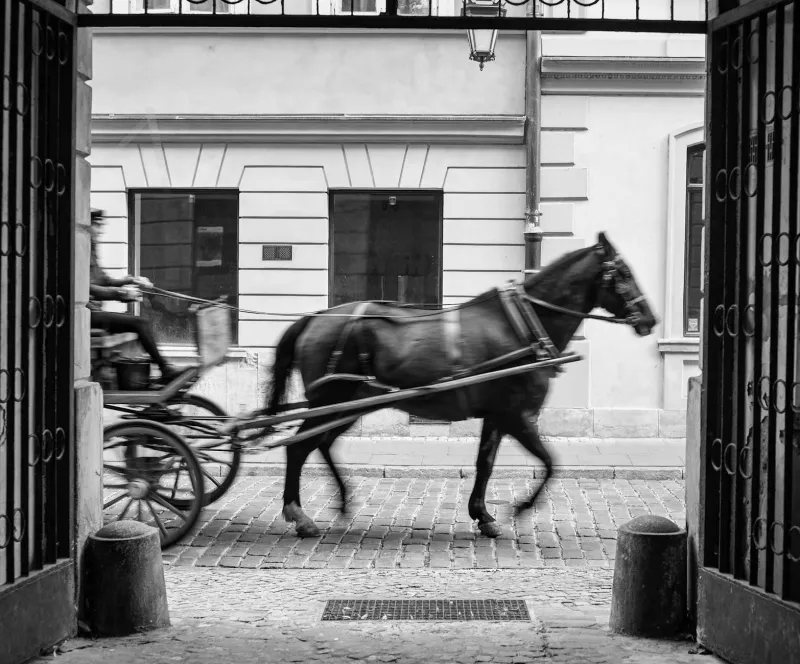
The year was 1872, and the human eye couldn't capture what happened in a fraction of a second. Artists painted horses with legs stretched front and back, but nobody actually knew if that's how horses really galloped. Stanford bet $25,000—roughly $600,000 today—that he could prove horses do indeed become briefly airborne.
He needed a photographer crazy enough to attempt the impossible. He found Eadweard Muybridge.
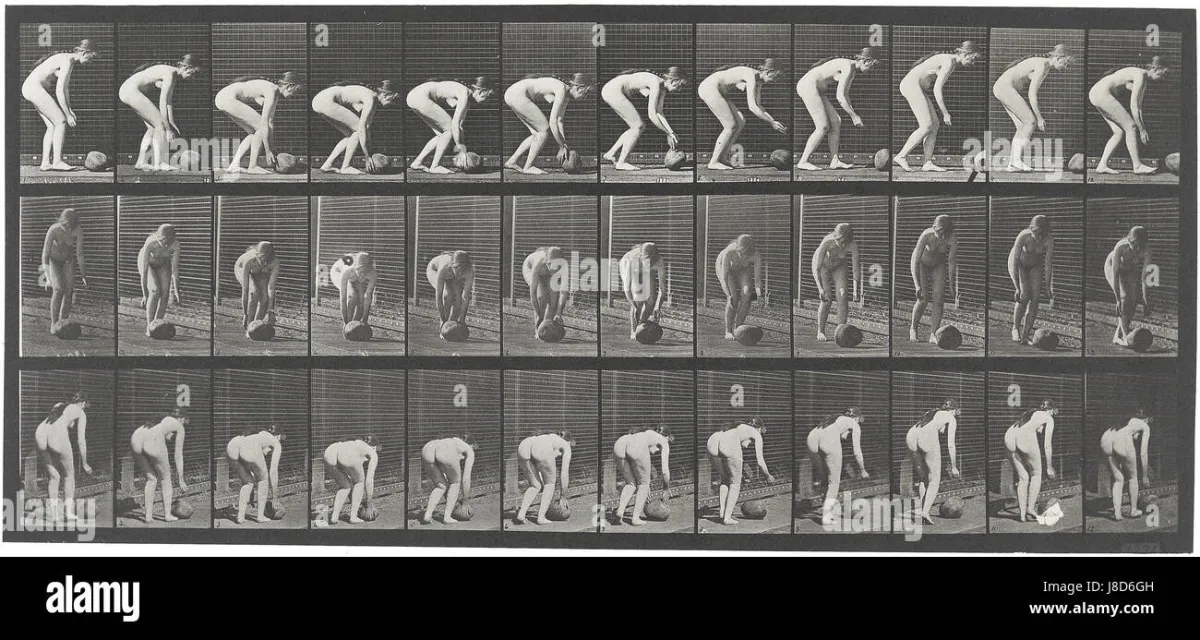 Photo: Eadweard Muybridge, via c8.alamy.com
The Perfect Storm of Obsession and Brain Damage
Muybridge wasn't your typical society photographer. Born Edward Muggeridge in England, he'd reinvented himself as Eadweard Muybridge after a stagecoach accident in 1860 that left him with severe head trauma. Friends said the accident changed his personality completely—turning a mild-mannered bookseller into an obsessive, volatile risk-taker with an explosive temper.
That brain damage might have been the best thing that ever happened to cinema.
By 1872, Muybridge had already established himself as one of America's most innovative landscape photographers. He'd hauled massive cameras up Yosemite cliffs and captured images that seemed impossible. But Stanford's challenge was different—it required stopping time itself.
Photographic technology in 1872 was primitive. Exposures took several seconds, meaning any moving subject became a blur. To freeze a galloping horse mid-stride, Muybridge would need to invent an entirely new approach to photography. Most sane photographers would have politely declined.
Muybridge was not most photographers.
Murder, Trial, and Artistic Breakthrough
Before he could solve Stanford's horse problem, Muybridge's personal life exploded in spectacular fashion. In 1874, he discovered his wife was having an affair. His response was characteristically extreme—he tracked down her lover and shot him dead.
The murder trial became a media sensation. Muybridge's lawyers argued that his head injury had affected his judgment, essentially pioneering the brain trauma defense. The jury sympathized with the cuckolded husband and acquitted him. But the scandal destroyed his marriage and left him a social pariah.
For most people, a murder trial would be a career-ending catastrophe. For Muybridge, it was just another obstacle to work around. He threw himself back into Stanford's seemingly impossible challenge with the single-minded focus of someone who had nothing left to lose.
The Palo Alto Experiment
Muybridge spent four years developing a system that could capture motion. His breakthrough came in 1878 at Stanford's Palo Alto estate, where he set up twenty-four cameras in a line along a racetrack. Each camera was connected to a wire stretched across the track at horse-height.
As Stanford's horse Occident galloped down the track, it triggered each camera in sequence, creating the world's first motion pictures. The results were revolutionary—and settled Stanford's bet definitively. Horses do lift all four hooves off the ground, but not in the stretched-out pose artists had been painting for centuries. Instead, they tuck all four legs under their bodies.
But Muybridge had accidentally created something far more valuable than proof of equine locomotion. When he displayed the sequential photographs rapidly using a device he called the "zoopraxiscope," the horse appeared to move. He had invented cinema.
From Horse Hooves to Hollywood Dreams
Word of Muybridge's moving pictures spread quickly. Thomas Edison heard about the experiments and immediately recognized their commercial potential. He invited Muybridge to his laboratory in 1888, where they discussed combining Muybridge's motion photography with Edison's phonograph to create "talking pictures."
That meeting planted the seeds for Edison's kinetoscope and, eventually, the entire motion picture industry. Muybridge had handed Edison the basic principles that would become Hollywood.
Meanwhile, Muybridge continued pushing the boundaries of motion photography. He photographed everything that moved—athletes, dancers, workers, animals. His "Animal Locomotion" series included over 100,000 images that revealed how humans and animals actually moved, overturning centuries of artistic assumptions.
The Accidental Empire Builder
Muybridge never intended to create an industry. He was just a brain-damaged photographer trying to win a bet about horses. But his obsessive personality and willingness to attempt the impossible made him the perfect person to solve a problem that had stumped everyone else.
His techniques inspired the Lumière Brothers in France, who created the first practical movie projector. His sequential photography influenced everyone from D.W. Griffith to Walt Disney. Every movie, television show, and video ever made traces its lineage back to those twenty-four cameras on a California racetrack.
By the time Muybridge died in 1904, nickelodeons were sprouting up in cities across America. The motion picture industry he'd accidentally founded was already generating millions of dollars. But Muybridge died nearly broke, having spent his final years giving lectures about motion photography to small academic audiences.
The Unlikely Father of an Unlikely Industry
Hollywood loves origin stories, but it rarely tells the story of its own origins. The movie industry wasn't founded by visionary entrepreneurs or entertainment moguls—it was created by a violent, obsessed photographer who just wanted to prove that horses could fly.
Muybridge's story proves that breakthrough innovations often come from the most unexpected places. You don't need an MBA, a business plan, or even a clear vision of what you're creating. Sometimes you just need to be crazy enough to think that twenty-four cameras and a galloping horse might solve a problem that everyone else considers impossible.
The next time you watch a movie, remember that everything on screen exists because a brain-damaged photographer once refused to admit that time couldn't be stopped. In the end, the most unlikely legends are often the ones who change the world by accident.